Oops! Something went wrong while submitting the form.
With the UK’s traditional phone network shutting down completely by January 2027, organisations are now required to review their entire communications setup. This national switch to digital services presents a critical opportunity to not only update your phone system but also to evaluate if your broadband and overall connectivity can support your business goals for 2026 and beyond.
Business telecoms have evolved far beyond simply providing internet access and phone lines. Today's organisations depend on reliable digital communications to power cloud applications, video conferencing, payment systems, cybersecurity, remote working, and customer service. Selecting the right business telecoms solution is no longer just an IT decision—it directly influences productivity, operational resilience, and long-term business growth.
Whether you're opening a new office, expanding across multiple locations, or replacing legacy infrastructure ahead of the PSTN switch-off, understanding how business broadband, VoIP phone systems, leased lines, and connectivity services work together will help you make informed decisions. This guide explains the core components of modern business telecoms, compares the available technologies, and provides a practical framework for choosing the right provider.
Why Business Telecoms Matter
Every modern organisation relies on digital communication infrastructure to operate efficiently. Employees access cloud software, collaborate through video meetings, process online transactions, communicate with customers, and manage operations across multiple locations using connected digital systems. Without dependable business telecoms, even short periods of downtime can interrupt productivity, reduce customer satisfaction, and increase operational costs.
Reliable business telecoms also support business continuity. High-quality broadband, resilient connectivity, and cloud-based phone systems enable employees to work effectively whether they are based in the office, working remotely, or operating from multiple locations. This flexibility has become increasingly important as hybrid working models continue to grow across the UK.
As organisations adopt more cloud-based services and digital technologies, choosing scalable telecom solutions ensures that communications infrastructure can continue supporting future expansion without requiring major system replacements.
What Are Business Telecoms?
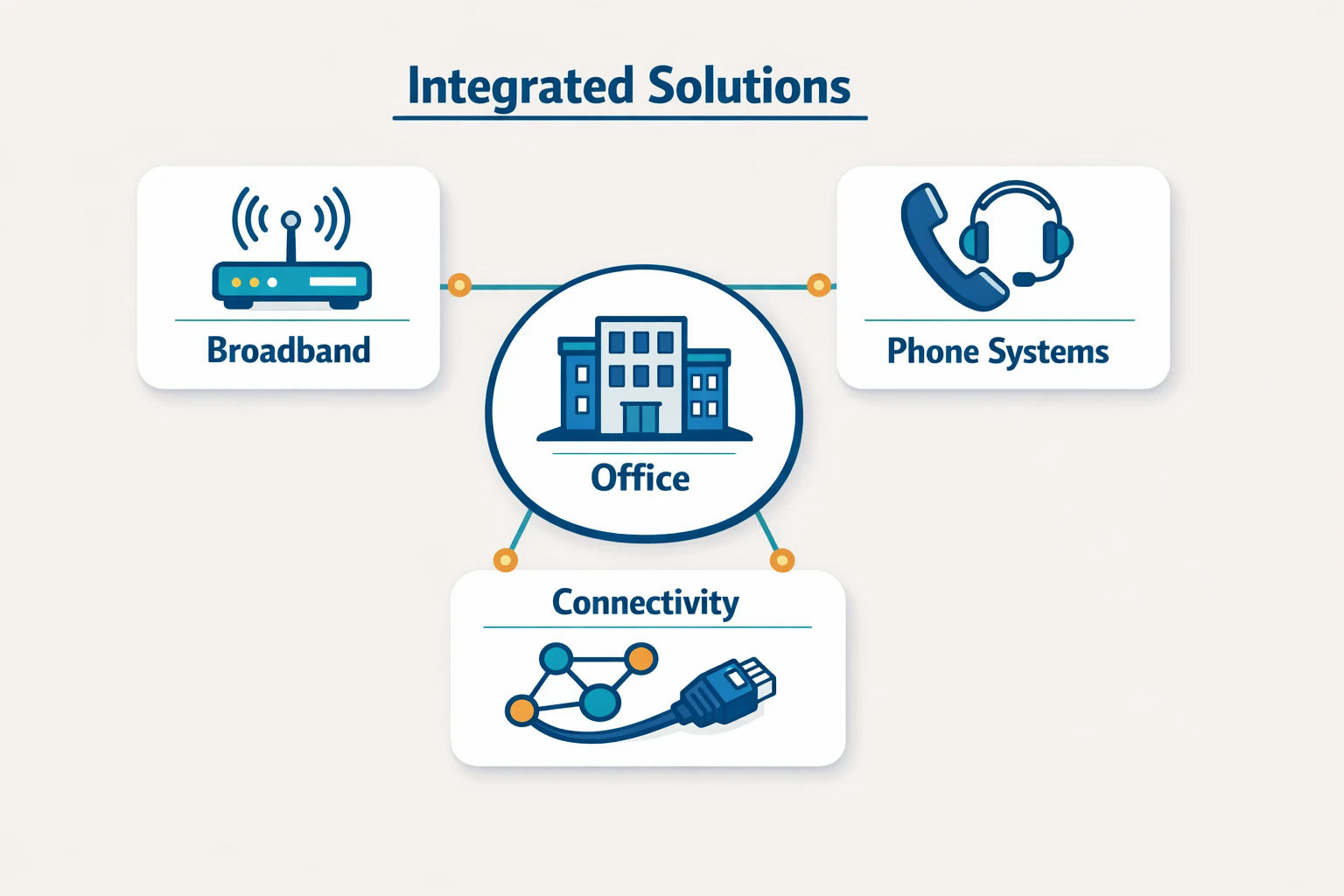
Business telecoms are the broadband, phone and connectivity services a company uses to communicate and operate. These three components work together: your business broadband provides the internet connection, your phone system uses that connection for calls, and your overall business connectivity ensures all your digital tools, from payment terminals to cloud software, function reliably. Understanding how they differ from residential services is the first step in making an informed choice.
Unlike residential packages, business telecoms services are designed around commercial reliability, scalability, security, and support. They typically include enhanced service level agreements (SLAs), faster fault resolution, dedicated account management, static IP options, business-grade hardware, and communications systems capable of supporting multiple users simultaneously.
Modern business telecoms also integrate multiple communication services into one connected ecosystem. Broadband, VoIP phone systems, Wi-Fi infrastructure, mobile connectivity, unified communications platforms, and cloud collaboration tools increasingly operate together to provide a seamless business communications environment.
Types of Business Telecoms Services
Business telecoms cover several interconnected services that support day-to-day operations. Understanding each service helps businesses build a communications infrastructure that matches their operational requirements.
Business Broadband
Business broadband provides internet connectivity for employees, cloud applications, email, web browsing, and online business operations. Depending on location and performance requirements, businesses may choose FTTP broadband, Fibre to the Cabinet (FTTC), or other fibre-based services.
Business Phone Systems
Modern business phone systems increasingly rely on Voice over Internet Protocol (VoIP), allowing organisations to make and receive calls using their internet connection instead of traditional copper telephone lines. Hosted VoIP solutions offer advanced features including call forwarding, voicemail-to-email, video conferencing, mobile integration, and remote working capabilities.
Leased Lines
A leased line delivers a dedicated internet connection exclusively for one organisation. Unlike shared broadband, leased lines provide guaranteed symmetrical upload and download speeds, making them suitable for businesses that rely heavily on cloud services, large file transfers, or uninterrupted connectivity.
Business Connectivity Solutions
Business connectivity extends beyond internet access. It includes secure networking between multiple sites, managed Wi-Fi, virtual private networks (VPNs), SD-WAN technologies, cloud connectivity, cybersecurity services, and resilient backup connections that keep organisations operational during unexpected outages.
Together, these services form the foundation of a modern business telecoms strategy, ensuring employees, customers, suppliers, and digital systems remain connected efficiently and securely.
Business Broadband and Internet Options
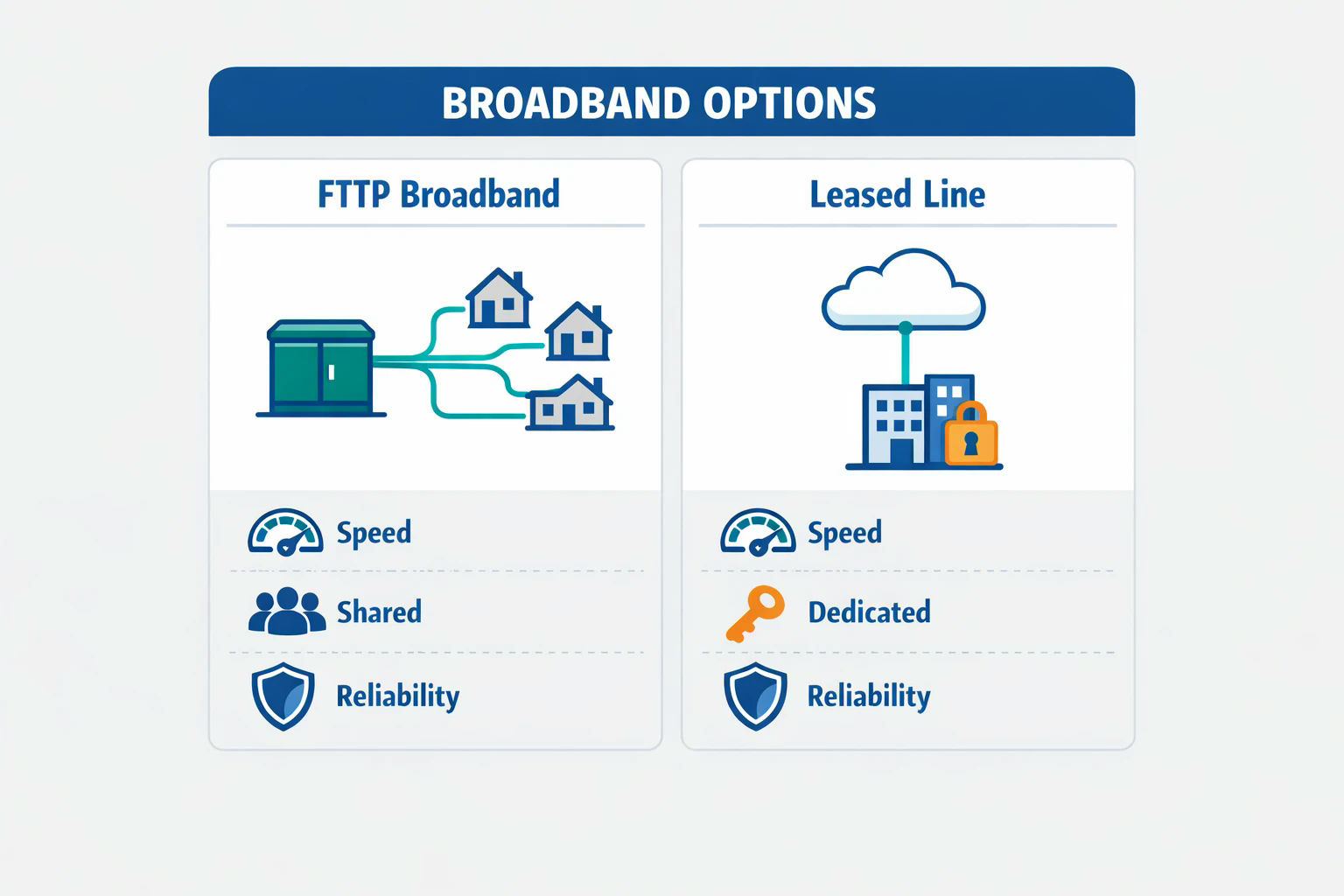
Business broadband provides your company with its connection to the internet, but not all connections are created equal. The main choices for a modern UK business are Fibre-to-the-Premises (FTTP) broadband and a dedicated leased line. While both offer high speeds, they deliver performance and reliability in fundamentally different ways. It is essential to compare business broadband options based on your operational needs, not just advertised download speeds.
Fibre-to-the-Premises (FTTP): This type of business internet runs a fibre optic cable directly to your building. It offers very fast download speeds but is often a "contended" service, meaning you share the main line with other businesses in your area. This can affect performance during peak hours.
Leased Line: A leased line is a private, dedicated fibre optic cable just for your business. The connection isn't shared with anyone. This guarantees symmetrical speeds (equally fast uploads and downloads) and comes with robust service level agreements (SLAs) that promise minimal downtime.
Business Phone Systems and Lines
Business phone systems are the technology and infrastructure that manage a company's incoming and outgoing calls. As the old copper-wire network is phased out, businesses must choose between a modern digital solution like VoIP or finding a way to adapt their existing business landline. The choice impacts everything from call costs and quality to your team's ability to work remotely.
VoIP (Voice over Internet Protocol): Modern business phone systems use VoIP technology to make calls over your internet connection instead of a traditional business phone line. Hosted VoIP solutions are managed in the cloud, offering advanced features like call routing, video conferencing, and the ability to use your business number on a mobile app or computer.
Landline (PSTN): A business landline refers to the traditional phone service that uses the Public Switched Telephone Network (PSTN). This is the system being switched off. While some providers offer adapters to make old handsets work on the new digital network, most businesses are using the switch-off as an opportunity to upgrade to a more flexible and cost-effective VoIP system.
Benefits of Modern Business Telecoms
Investing in modern business telecoms delivers advantages that extend well beyond faster internet speeds or improved phone systems. A fully integrated communications solution supports productivity, customer experience, operational resilience, and future business growth.
One of the most significant benefits is flexibility. Cloud-based telecoms services allow employees to work from virtually anywhere while maintaining secure access to business communications, improving collaboration across offices, home workers, and mobile teams.
Scalability is another major advantage. As businesses expand, additional users, locations, phone numbers, and connectivity services can often be added without replacing the underlying infrastructure. This allows telecoms systems to evolve alongside business growth.
Modern business telecoms also improve reliability through resilient internet connections, cloud-hosted services, automatic call routing, and business continuity features that minimise disruption during outages or office closures.
Finally, integrated telecoms solutions often reduce operating costs by consolidating suppliers, simplifying billing, lowering call charges, and reducing maintenance requirements associated with older telephone systems.
Broadband vs Leased Line vs VoIP: Which Do You Need?
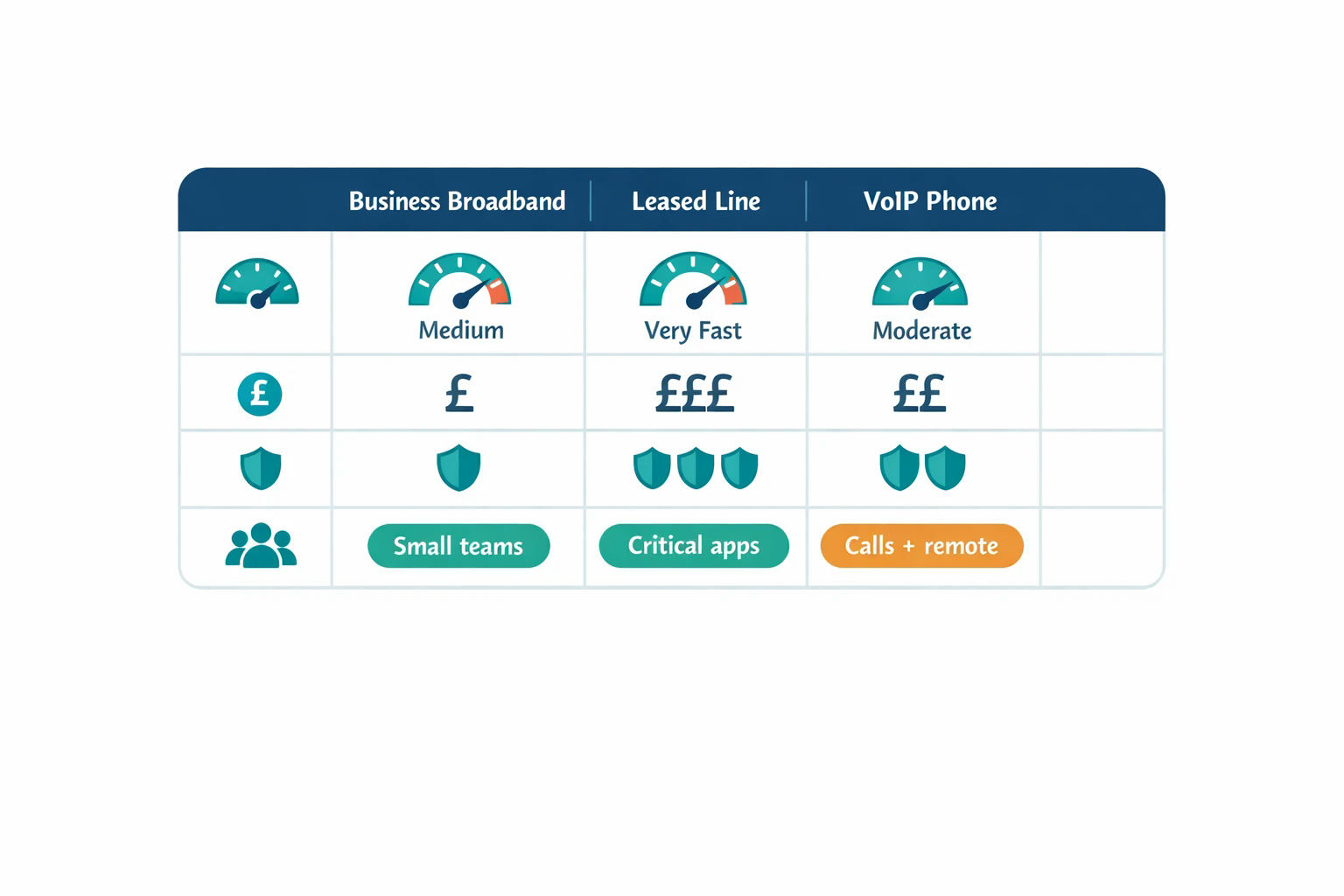
Choosing the right service depends on balancing cost, performance, and operational needs. A startup may prioritize the low cost of business broadband, while a financial services firm cannot afford the risk of a shared connection and will opt for a leased line.
Business Broadband (FTTP)
Speed: Offers high download speeds with variable upload performance.
Cost: Features lower monthly costs and affordable installation.
Reliability: Provides good performance, but operates on shared infrastructure.
Scalability: Suitable for many Small and Medium-sized Enterprises (SMEs).
Best For: Small and medium businesses.
Leased Line
Speed: Delivers guaranteed symmetrical upload and download speeds.
Cost: Requires a higher monthly investment with dedicated infrastructure.
Reliability: Offers a dedicated connection with guaranteed uptime through Service Level Agreements (SLAs).
Scalability: Easily supports growing businesses and high bandwidth demands.
Best For: Organisations relying heavily on cloud services and uninterrupted connectivity.
VoIP Phone System
Speed: Performance depends entirely on the underlying internet connection.
Cost: Features low monthly cost per user with reduced call charges.
Reliability: Highly reliable when paired with quality internet connectivity.
Scalability: Users and phone numbers can be added quickly as businesses expand.
Best For: Businesses seeking flexible communications and remote working capabilities.
Rather than viewing these services as competing alternatives, many organisations combine them. For example, a business may operate a leased line as its primary internet connection while running a cloud-based VoIP phone system across multiple offices. Smaller organisations may choose FTTP broadband alongside hosted VoIP to achieve an excellent balance between performance and affordability.
Should You Bundle Business Telecoms Services?
Many businesses now choose bundled telecoms packages that combine broadband, phone systems, connectivity, mobile services, and IT support under a single provider. This approach simplifies supplier management while reducing administrative overhead.
Bundling services often provides several advantages. Organisations benefit from consolidated billing, one point of contact for support, simplified contract management, and better coordination when technical issues arise. Instead of determining whether a fault lies with the broadband provider or phone provider, one supplier manages the entire communications environment.
Bundled business telecoms can also generate cost savings. Providers frequently offer discounted pricing when multiple services are purchased together, making bundled solutions attractive for growing organisations seeking both operational simplicity and predictable monthly costs.
However, businesses should still compare bundled packages carefully. The lowest overall price may not always provide the strongest service levels, scalability, or technical support. Evaluating contract flexibility, SLAs, future upgrade options, and provider reputation remains essential before committing to any long-term agreement.
How to Choose a Business Telecoms Provider
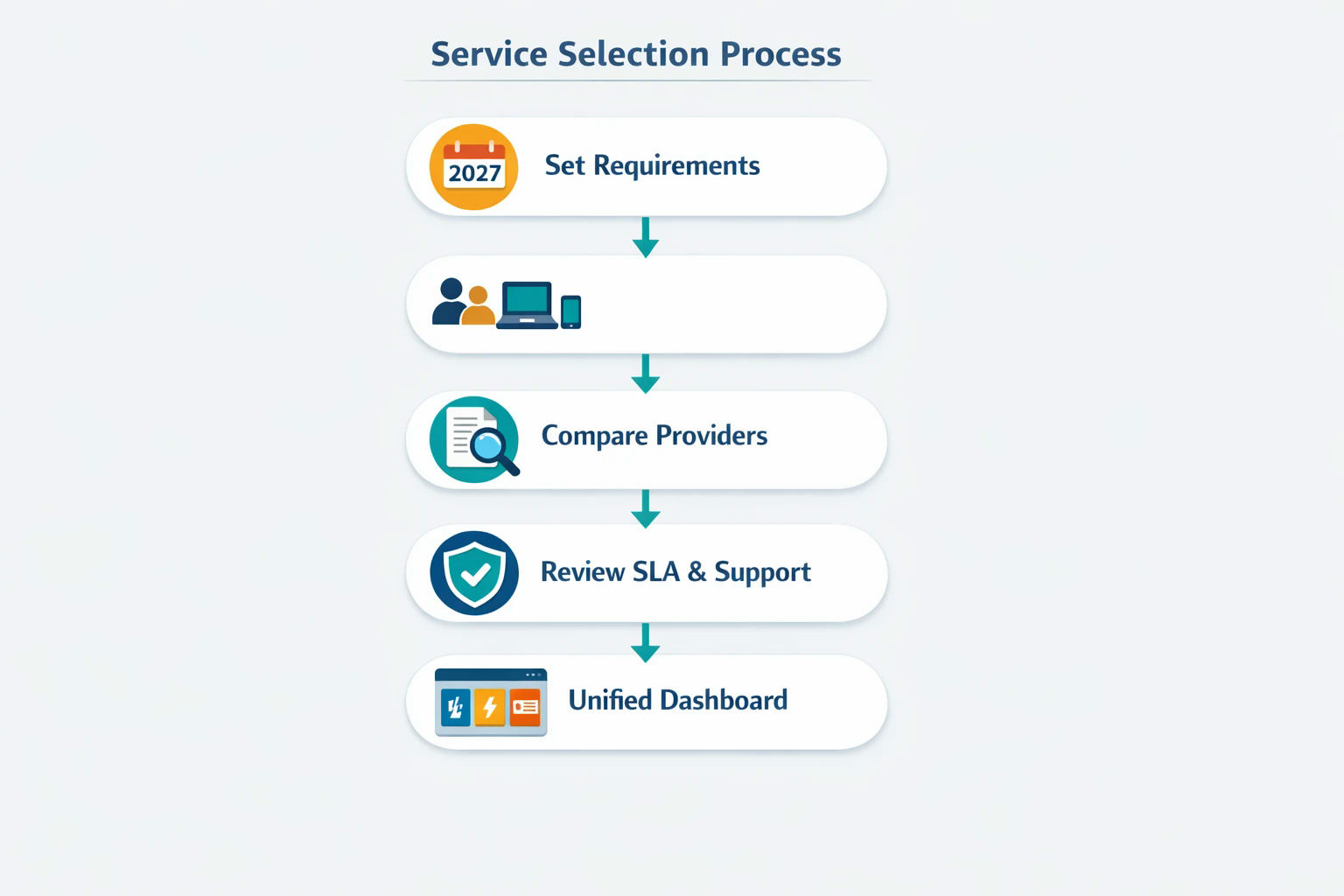
Selecting the right business telecoms provider requires looking beyond headline prices and assessing your specific operational needs. A systematic approach ensures you secure a package that supports your business now and can adapt as you grow.
Follow this procedural checklist to make a confident decision:
Assess Your Needs: How many employees need a phone line? Do you rely on cloud software or video conferencing? Is your business entirely on-site or does it support remote work? Answering these questions helps define your requirements.
Confirm PSTN Readiness: Check if your current phone system, alarms, or payment terminals use the old copper network. Your provider must have a clear plan for migrating these services.
Evaluate Internet Usage: Analyse your upload speed requirements. Businesses that use cloud backups, host servers, or make many VoIP calls need strong upload performance, which often points toward a leased line.
Compare Providers Independently: Look beyond the big names. An independent consultant can compare a wider market of providers to find the best fit and pricing for your specific needs, rather than pushing one company's products.
Check the Service Level Agreement (SLA): For any critical connection, understand the provider’s guaranteed uptime, target fix times, and compensation for outages. A cheap service with a poor SLA can cost you more in the long run.
Common Mistakes When Choosing Business Telecoms
Selecting the wrong business telecoms solution can create unnecessary costs, operational disruption, and scalability challenges. Many businesses focus primarily on monthly pricing while overlooking the factors that have the greatest long-term impact on communications performance.
Choosing Based on Price Alone
The cheapest broadband or phone package is not always the most cost-effective option. Businesses should evaluate reliability, technical support, service level agreements, scalability, and contract flexibility alongside monthly costs. A lower-priced service that suffers frequent outages or slow repair times can become significantly more expensive through lost productivity.
Ignoring Upload Speeds
Many organisations compare internet services using download speeds alone. However, modern businesses increasingly depend on cloud applications, VoIP calls, video conferencing, cloud backups, and remote collaboration, all of which require strong upload performance. This is often where leased lines outperform standard business broadband.
Overlooking the PSTN Switch-Off
Some organisations continue delaying migration away from traditional telephone systems. Waiting until the final stages of the PSTN switch-off increases the risk of rushed installations, reduced provider availability, and unnecessary business disruption. Planning early allows businesses to migrate at their own pace while evaluating the most suitable long-term communications solution.
Not Planning for Future Growth
A telecoms solution should support business expansion, not limit it. Organisations expecting to recruit additional employees, open new offices, or increase cloud adoption should select scalable broadband, phone systems, and connectivity services that can grow alongside the business.
Ignoring Service Level Agreements
Service Level Agreements (SLAs) define response times, uptime commitments, and fault resolution guarantees. Businesses that rely on uninterrupted communications should carefully compare SLA terms before selecting a provider, particularly when evaluating leased lines or business-critical connectivity.
Business telecoms refers to the suite of communication services a company uses, which includes its business internet connection (like broadband or a leased line), its phone system (such as VoIP), and the overall business connectivity that links all its digital operations.
What is a leased line?
A leased line is a private, dedicated internet connection that is not shared with any other businesses. It provides symmetrical, guaranteed speeds for both uploads and downloads and comes with a service level agreement that ensures high reliability and fast repair times.
Is VoIP better than a business landline?
For most businesses in 2026, VoIP is significantly better than a traditional business landline. It offers lower call costs, greater flexibility for remote work, and advanced features like video conferencing and call routing. With the old landline network being switched off, moving to VoIP is now a necessary upgrade.
Find the Right Business Telecoms Solution
Compare broadband, leased lines, VoIP, and bundled services with independent expert guidance. Contact Green Light Consultancy Group today to build a reliable, scalable telecoms package for your business.