Oops! Something went wrong while submitting the form.
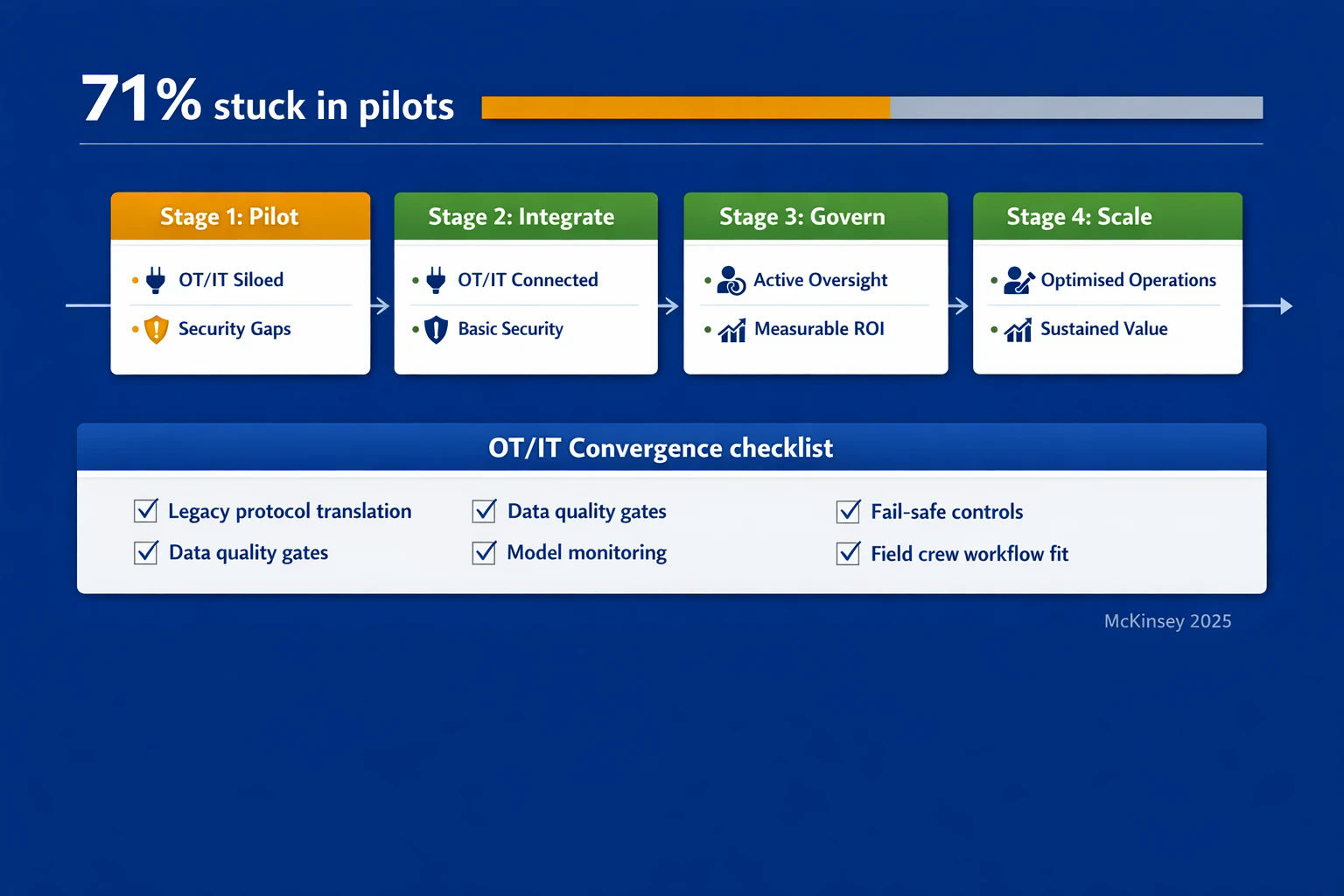
A 2025 McKinsey report revealed a stark reality for the UK utility sector: 71% of AI and digital transformation initiatives are stuck in "pilot purgatory," failing to reach full-scale production. For directors and strategic leads, this isn't just a technology problem. It’s a business bottleneck that stalls efficiency gains, exposes operations to regulatory risk, and delays the crucial "Twin Transformation" toward a digital and green future.
While many guides focus on what technology to buy, they miss the fundamental question UK decision-makers are asking: How do we make these advanced systems work within our existing operational realities and the strict 2026 regulatory framework?
This blueprint moves beyond a simple list of trends. It provides a practical utility digital transformation strategy for navigating the specific challenges of the UK market, from integrating with decades-old operational technology (OT) to building a business case that stands up to regulatory scrutiny.
We'll cover how to de-risk your digital strategy and ensure your investments deliver measurable returns.
What is digital transformation in utility management?
Digital transformation in utility management is the process of using technologies such as artificial intelligence (AI), Internet of Things (IoT) sensors, automation, and advanced data analytics to improve how utility services are monitored, managed, and optimised. Rather than relying on manual processes and disconnected systems, organisations use digital tools to improve efficiency, strengthen operational resilience, and support better decision-making.
For UK businesses, digital transformation in utility management increasingly extends beyond technology adoption. It also involves integrating legacy infrastructure, improving data governance, enhancing compliance processes, and creating the operational capabilities needed to support long-term sustainability goals.
A successful utility digital transformation strategy combines technology, people, processes, and governance to deliver measurable improvements in cost control, asset performance, and regulatory compliance.
The 2026 regulatory gauntlet: Digital is no longer optional
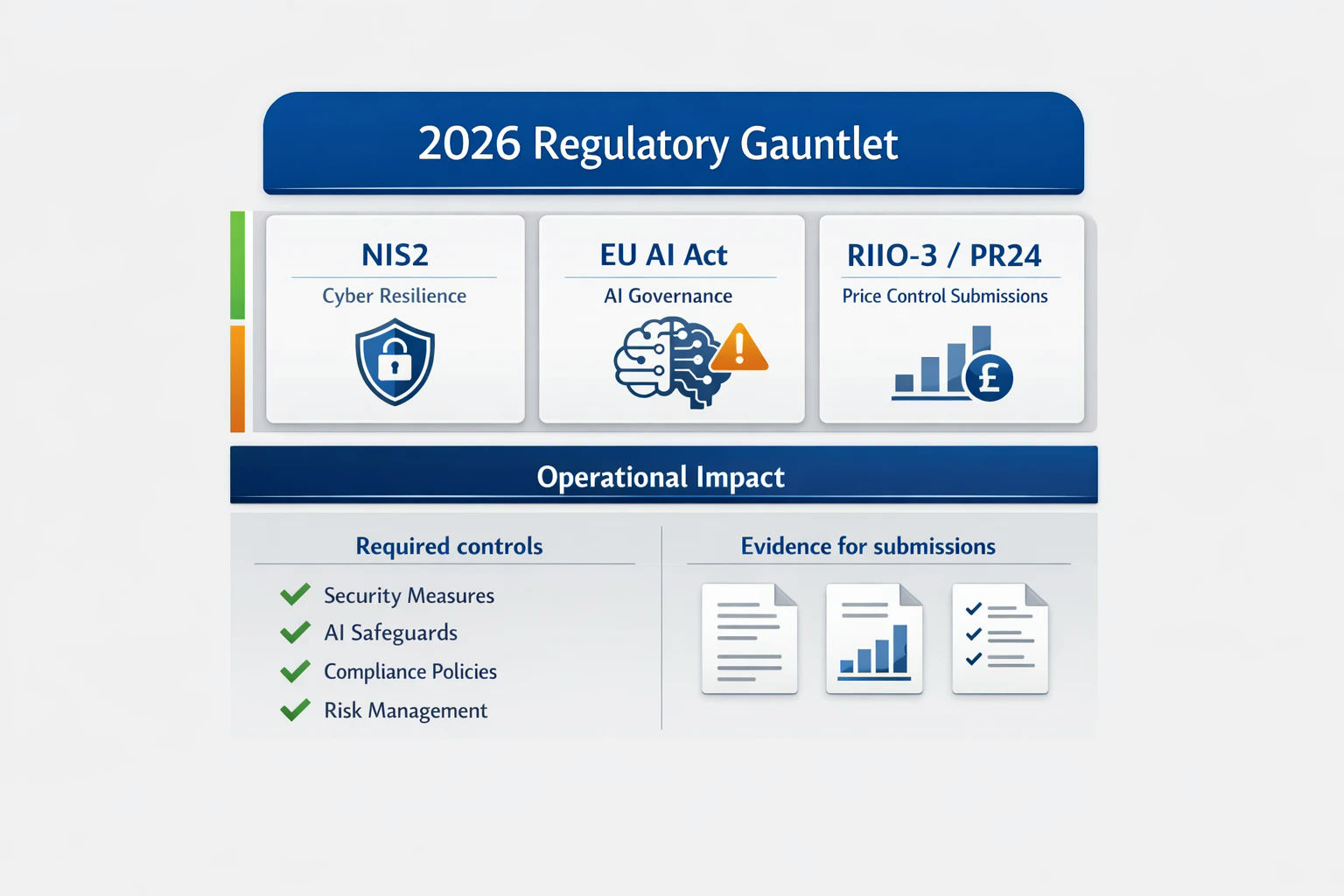
The pressure to digitalise isn't just coming from a desire for efficiency. Regulators are now embedding digital requirements directly into their price controls. For 2026 and beyond,Ofgem's RIIO-3 and Ofwat's PR24 frameworks demand greater data transparency, asset health monitoring, and operational resilience.
Simply put, your ability to demonstrate effective digital governance is becoming a core component of your license to operate. This means having clear, auditable strategies for cybersecurity under NIS2 regulations and preparing for the data governance standards set by the EU AI Act. Transformation is now a matter of compliance. Organisations that develop a clear utility digital transformation strategy will be better positioned to meet evolving regulatory expectations while improving operational performance.
Escaping 'pilot purgatory': The OT/IT convergence challenge
The primary reason that 71% of digital projects stall is the failure to bridge the gap between modern IT systems and legacy operational technology. It's one thing to run an AI model on a clean dataset in a lab; it's another to connect it to a 1980s substation and expect reliable, real-time decisions.
Successful deployment isn’t about replacing every legacy asset. That's a capital expenditure nightmare. The key is a "Retrofit First" philosophy, layering smart IoT sensors and data gateways onto existing infrastructure. For many organisations, this becomes the foundation of a successful utility digital transformation strategy, allowing digital capabilities to scale without wholesale infrastructure replacement. This approach requires a clear pathway from pilot to production that addresses the practical hurdles.
A production-ready checklist includes:
Data Readiness: Do you have a strategy for cleaning and contextualising data from older, non-standardised assets?
Integration Scalability: Does your chosen platform communicate with your existing SCADA and control systems without creating security flaws?
Workflow Adoption: Is the system designed for "boots on the ground" implementation, providing clear and actionable insights to field crews, not just data scientists?
Governance Controls: Have you established "human-in-the-loop" protocols for when an AI makes a critical decision about grid management or water flow?
Ignoring these steps is why promising pilots fail to deliver value at scale.
How do you implement digital transformation in utility management?
Successful digital transformation requires a structured approach that aligns technology investments with operational objectives and regulatory requirements. Organisations that focus solely on software deployment often struggle to achieve long-term adoption and measurable business outcomes.
A practical implementation framework includes:
1. Assess existing infrastructure
Evaluate current systems, operational technology (OT), data quality, and integration requirements. Understanding legacy constraints helps prioritise realistic deployment strategies.
2. Define business outcomes
Establish clear objectives such as reducing outages, improving asset utilisation, supporting compliance, or lowering operational costs. Success metrics should be agreed before implementation begins.
3. Prioritise scalable use cases
Focus on projects that can move beyond pilot stage, such as predictive maintenance, asset monitoring, demand forecasting, or energy optimisation.
4. Build governance and oversight
Create processes for data management, cybersecurity, AI oversight, and regulatory compliance. Human-in-the-loop controls remain essential for critical infrastructure decisions.
5. Measure and refine performance
Track operational improvements, financial returns, and adoption rates. Continuous evaluation helps ensure digital investments continue to deliver value as requirements evolve.
By following a structured implementation process, organisations can reduce deployment risk and improve the likelihood of achieving successful digital transformation outcomes.
How to evaluate partners, not just platforms
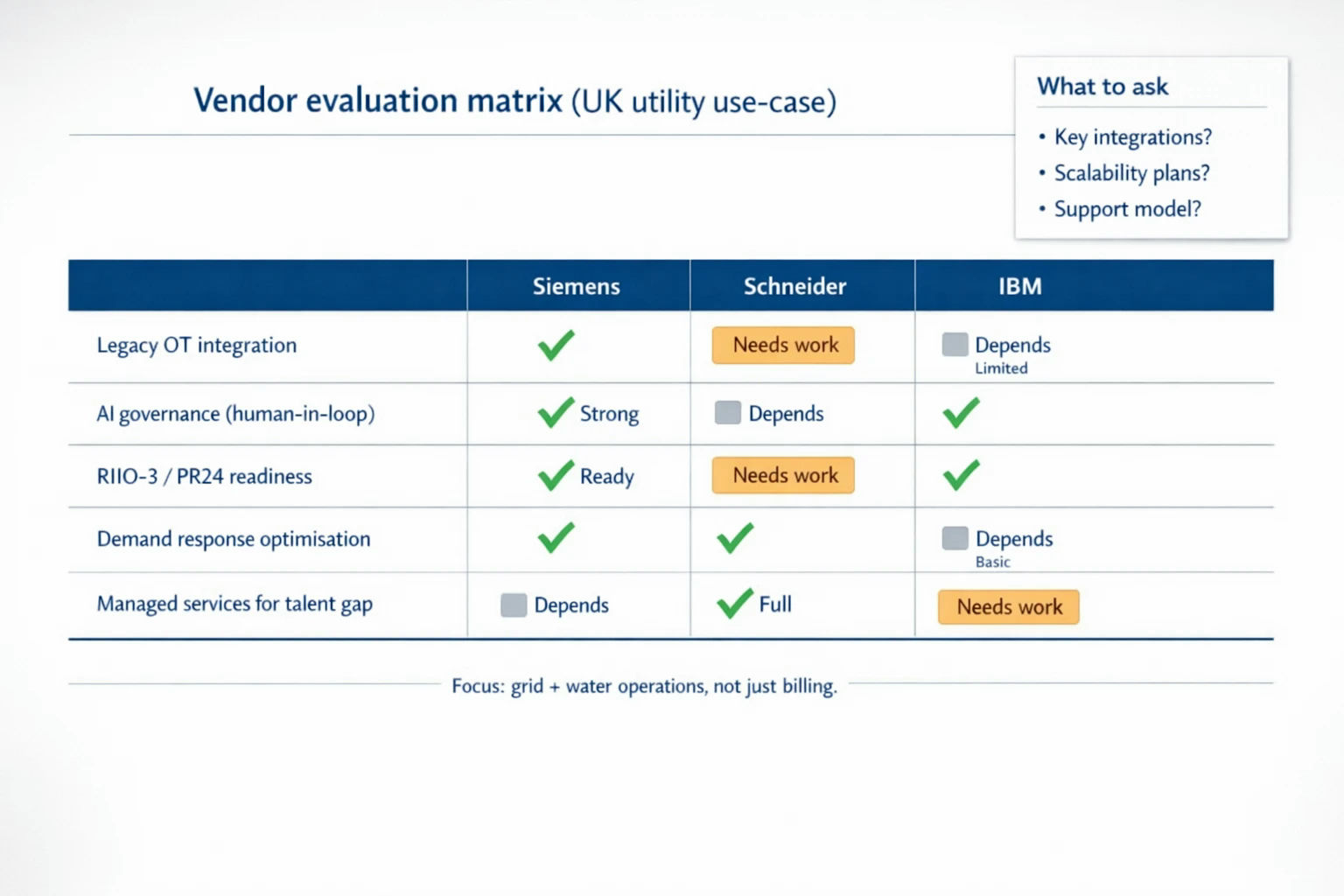
The market is crowded with platforms promising AI-driven optimisation. However, many are US-centric and focus heavily on billing and data capture rather than the core UK challenges of grid optimisation and regulatory compliance. To make the right choice, you need a scorecard tailored to UK operational realities. Selecting the right technology and service partners is a critical component of any utility digital transformation strategy, particularly where specialist regulatory and operational expertise is required.
This challenge is compounded by a significant skills shortage. The UK and EU electricity sector currently faces a 34% AI talent gap, making it difficult for many businesses to manage these complex systems in-house. This elevates the importance of finding a partner who offers managed services and deep domain expertise. When evaluating potential solutions, consider asking:
Regulatory Fluency: Can they demonstrate how their system helps meet specific Ofgem RIIO-3 and Ofwat PR24 reporting requirements?
Retrofit Capability: Do they have proven case studies of integrating with the specific legacy assets currently in your portfolio?
Focus Area: Is their solution built for critical infrastructure and grid optimisation, or is it a repurposed billing and analytics tool?
Support Model: Do they offer ongoing support and expertise to fill your internal talent gap, or do they just hand over the software?
As an independent consultancy, we help businesses navigate these complex procurement decisions. An impartial advisor can ensure your choice is based on a true operational fit, not just a compelling sales pitch.
The investment-grade business case for digital utilities
Securing board-level approval requires a business case built on tangible, quantified outcomes. A well-defined utility digital transformation strategy should connect technology investments directly to operational improvements, financial returns, and regulatory objectives.Vague claims of "improved efficiency" are no longer enough. Fortunately, credible data from sources like the IEA and National Grid provides a strong foundation for your investment proposal.
The financial and operational returns are compelling:
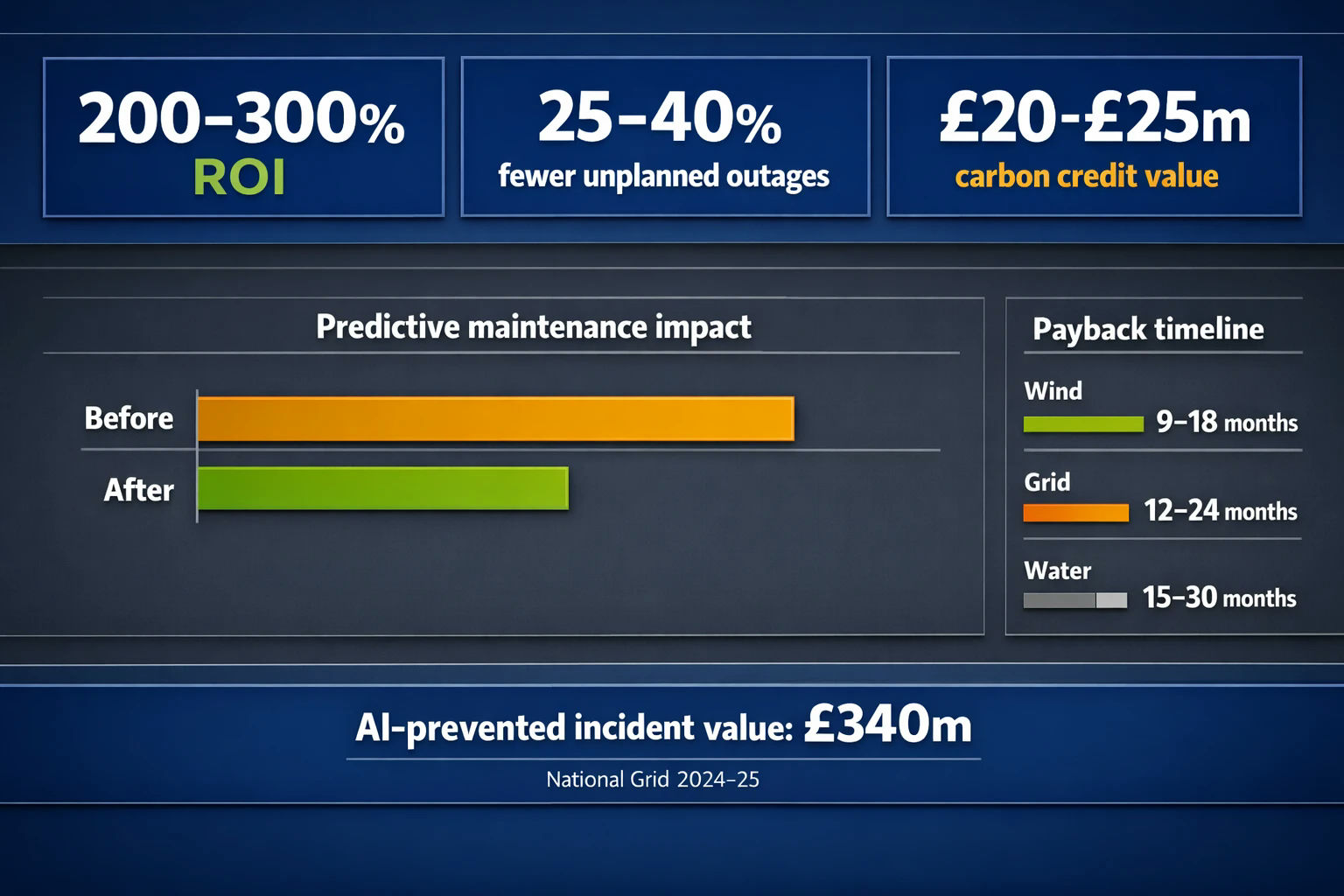
Reliability and Cost Reduction: AI-driven predictive maintenance on grid assets can yield a 200-300% ROI, with a 25-40% reduction in unplanned outages. For context, National Grid valued AI-prevented incidents at £340 million in its 2024-25 report.
Sustainability Goals: Optimising operations with AI can create £20-£25 million in carbon credit value for large-scale operators, directly contributing to net-zero targets.
Capital Deferment: The "Retrofit First" approach avoids massive capital expenditure, extending the life of existing assets while still achieving digital capabilities.
These figures transform digital investment from a cost centre into a clear driver of financial performance and operational resilience, aligning perfectly with the goals of both shareholders and regulators.
Beyond the grid: Using data to rebuild customer trust
The final, often overlooked, piece of the digital puzzle is its role in managing your "social license." Public trust in the utility sector has been tested, particularly following challenges like the smart meter rollout. Directors are rightly concerned with rebuilding that trust.
This is where digital transformation offers a powerful solution. By usingIoT and data analytics to monitor energy consumption and provide customers with transparent, real-time information about outages, consumption patterns, and grid health, you can shift the narrative from reactive crisis management to proactive communication. This data-driven transparency aligns with GLCG's core values of honesty and simplicity, turning a regulatory requirement into a powerful tool for customer engagement and reputation management.
Ultimately, a successful utility digital transformation strategy is not defined by the technologies deployed but by the outcomes achieved. Organisations that align digital initiatives with operational requirements, regulatory obligations, and long-term business goals are more likely to move beyond pilot projects and realise lasting value.
Request a Utility Digital Readiness Assessment
Many digital transformation projects fail because organisations underestimate the challenges of data quality, legacy system integration, and operational adoption. A utility digital readiness assessment helps identify potential barriers before major investment decisions are made.
Green Light Consultancy Group works with organisations to evaluate existing infrastructure, assess regulatory readiness, and develop practical utility digital transformation strategies that deliver measurable results.
If you're planning digital utility initiatives in 2026, speak with our team about a utility digital readiness assessment.
Build a Smarter Utility Digital Strategy
Move beyond pilot projects with a practical digital transformation plan built around OT integration, data governance, cybersecurity, regulatory compliance, and measurable operational performance.