Oops! Something went wrong while submitting the form.
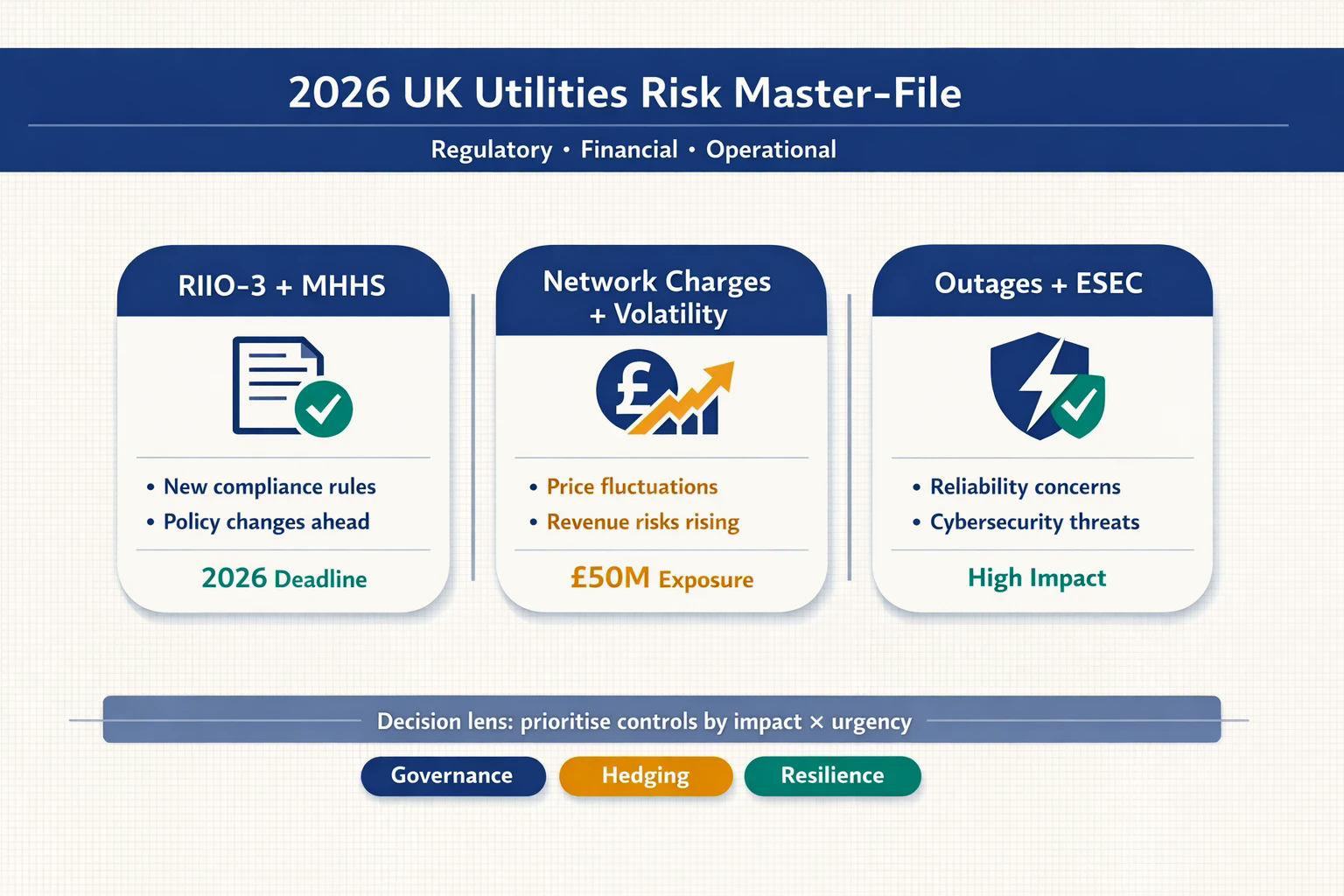
Starting April 1, 2026, many UK businesses will see fixed Transmission Network Use of System (TNUoS) charges rise by up to 94%. This isn't a minor adjustment; it's a structural shift in how utility costs are calculated, driven by Ofgem's new RIIO-3 price control framework. This financial shock is converging with two other critical pressures: a mandatory move to half-hourly energy data settlement and rising anxiety around grid stability, often mislabelled as an 'energy lockdown'.
For business leaders, this creates a triple threat of regulatory, financial, and operational risk. Navigating 2026 successfully requires a clear understanding of these interconnected challenges and a proactive utility resilience planning strategy that mitigates risk before it impacts your bottom line.
The regulatory countdown: RIIO-3 and MHHS explained
Two key regulatory deadlines in early 2026 are forcing businesses to re-evaluate their entire approach to energy management. These are not just compliance exercises; they have direct financial consequences.
Understanding the RIIO-3 framework
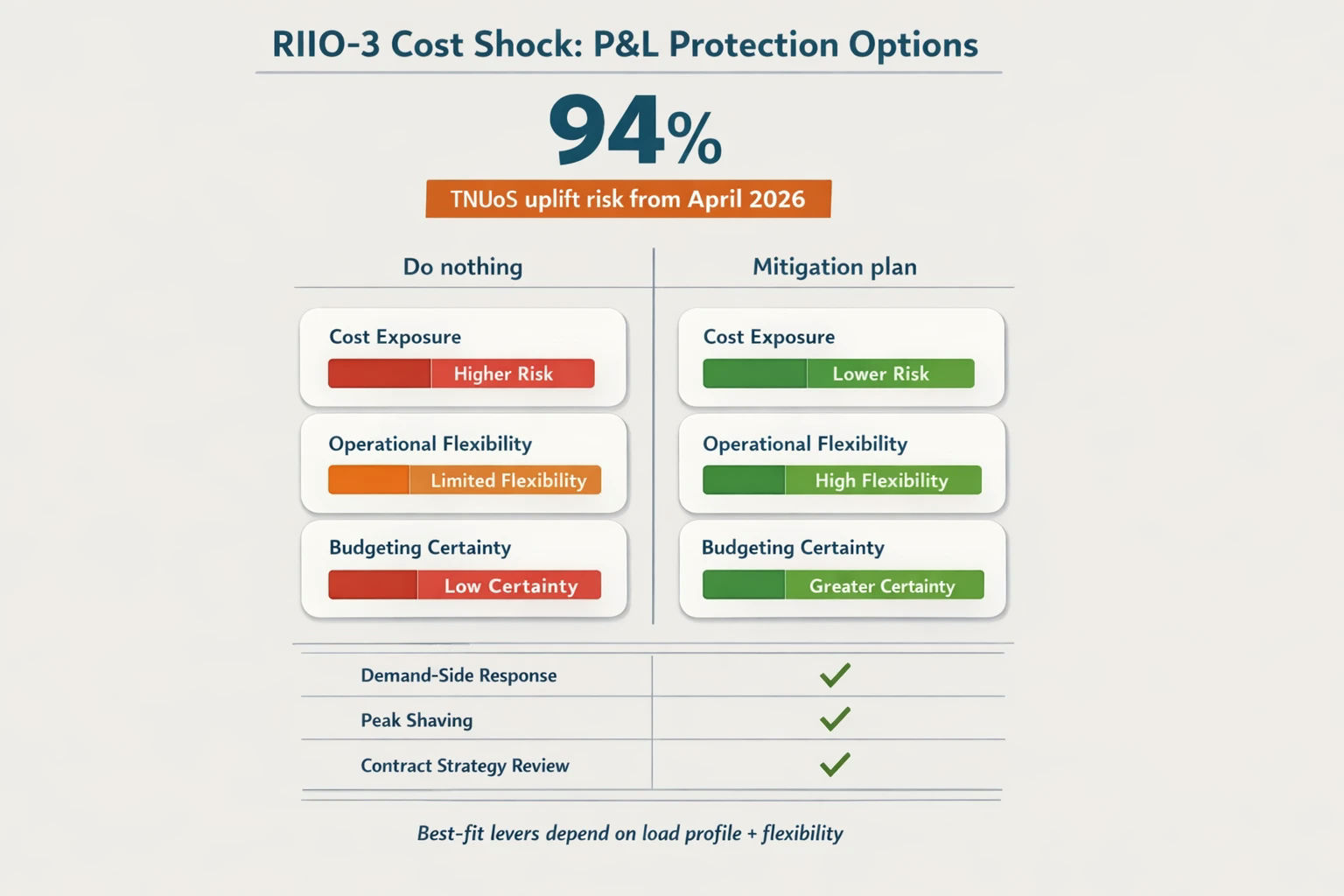
Effective April 1, 2026, Ofgem's RIIO-3 (Revenue = Incentives + Innovation + Outputs) framework will change how the UK’s energy network companies are funded. A major outcome is the forecasted 94% increase in the fixed component of TNUoS charges for many businesses. This means that a significant portion of your electricity bill will become much more expensive and harder to control through simple consumption reduction alone. Businesses that previously considered themselves non-energy-intensive will feel the impact, as these standing charges apply regardless of usage patterns.
Preparing for mandatory half-hourly settlement (MHHS)
At the same time, the entire market is shifting to Market-wide Half-Hourly Settlement (MHHS) in early 2026. This move officially ends estimated billing for commercial users. Suppliers will settle charges based on actual energy used in every 30-minute period. While this offers opportunities for granular control, it also exposes businesses with poor data management. Without accurate, accessible half-hourly data, you cannot verify bills, identify savings opportunities, or participate in lucrative demand-side response programs.
Protecting your P&L from the 94% network charge shock
The significant increase in fixed network charges requires a strategic response beyond simply trying to use less energy. The focus must shift from pure consumption reduction to when you consume energy.
This is where active energy management becomes critical. Strategies like peak shaving (reducing consumption during high-cost periods) and Demand Side Response (DSR), where you are paid to reduce load to help balance the grid, move from niche concepts to essential financial tools. An independent review of your options for `securing competitive business electricity rates` can also identify contracts with structures better suited to this new cost landscape. The goal is to build flexibility into your energy profile to counteract the inflexible nature of rising standing charges.
The 'energy lockdown' myth vs. ESEC reality
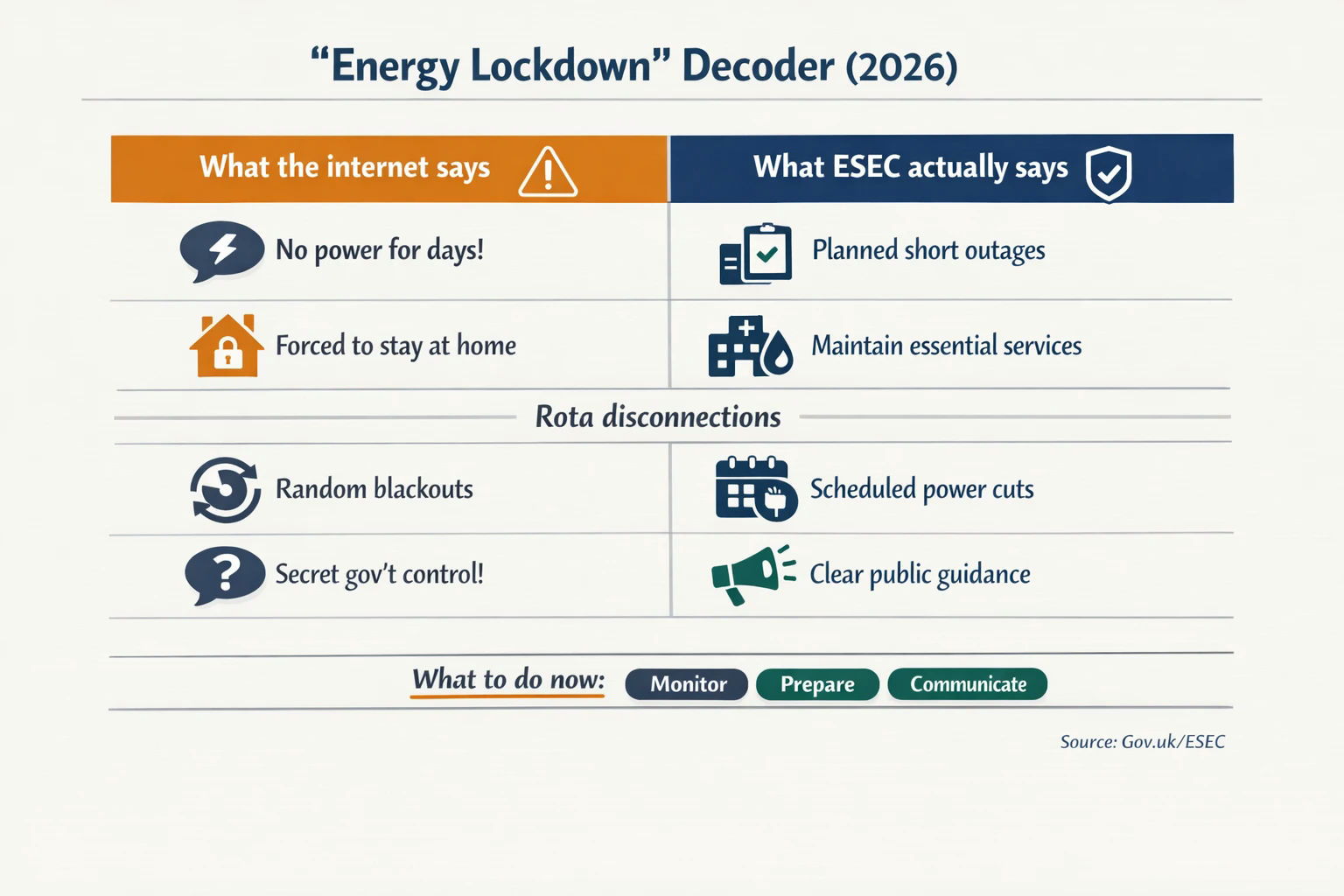
The term 'energy lockdown' has gained traction online, creating significant uncertainty. However, this phrase is a misinterpretation of the official government framework designed for national energy emergencies.
The correct term is the Electricity Supply Emergency Code (ESEC). This is a set of pre-planned, emergency measures the government can enact to protect the integrity of the grid during a severe supply shortage. It includes steps like asking large industrial users to reduce demand and, as a last resort, implementing controlled "Rota Disconnections" to prevent a total grid collapse.
Understanding the facts about ESEC allows you to move past the fear-based narrative and focus on practical business continuity planning. Instead of worrying about a vague 'lockdown', you can prepare for the specific, albeit unlikely, scenarios outlined in the official code.
Managing operational risk: Grid stability in 2026
While an ESEC scenario is a low-probability event, real-world operational risks to the grid do exist. These risks create the price volatility that directly affects your utility bills.
A clear example is the tight supply margin anticipated for this summer. The Sizewell B nuclear power station, a key source of baseload power, is scheduled to complete a statutory outage on June 4, 2026. This kind of planned maintenance, combined with unpredictable factors, can narrow the gap between electricity supply and demand, leading to price spikes. For risk managers, mapping these known pressure points allows for better budgeting and operational planning, including understanding your business gas options as part of a resilient dual-fuel strategy.
How should businesses assess utility risk in 2026?
Utility risk assessment is a core component of utility resilience planning. Businesses should evaluate regulatory, financial, operational, and data-related exposures that could affect cost, compliance, or business continuity. By identifying vulnerabilities early, organisations can prioritise mitigation strategies and improve resilience ahead of major market changes. By identifying vulnerabilities early, organisations can prioritise mitigation strategies and improve resilience ahead of major market changes.
A practical utility risk assessment framework includes the following areas:
Regulatory risk
Review upcoming obligations linked to RIIO-3, Market-wide Half-Hourly Settlement (MHHS), SECR, ESOS, and other regulatory requirements. Businesses should confirm that reporting processes, metering arrangements, and internal governance structures are prepared for future compliance obligations.
Financial risk
Assess exposure to rising network charges, wholesale market volatility, out-of-contract rates, and supplier pricing structures. Modelling different cost scenarios helps organisations understand the potential impact on operating budgets.
Operational risk
Evaluate the potential impact of supply interruptions, infrastructure outages, and demand constraints. Critical sites should have continuity plans in place for power disruptions and emergency operating conditions.
Data risk
Review the quality, accessibility, and accuracy of utility consumption data. As MHHS increases reliance on half-hourly settlement data, poor data governance can lead to billing disputes, reporting errors, and missed savings opportunities.
Strategic resilience
Identify opportunities to improve flexibility through demand-side response programmes, energy monitoring systems, contract optimisation, and diversified utility procurement strategies.
By conducting regular utility risk assessments, organisations can move from reactive crisis management to proactive utility resilience planning, reducing both financial exposure and operational disruption while improving long-term business continuity.
Your path to a resilient 2026
The convergence of these regulatory, financial, and operational pressures demands a proactive and integrated response. Waiting for the April 2026 deadlines is not a viable strategy. By taking clear steps now, you can mitigate risks and potentially uncover a competitive advantage.
Here is a simple checklist to guide your preparation:
Audit your data architecture: Ensure you can access and analyse clean half-hourly data to comply with MHHS and identify savings.
Model the financial impact: Quantify how the 94% TNUoS increase will affect your specific operational budget.
Review your supply contracts: Assess whether your current contract structure is fit for purpose in the new RIIO-3 landscape.
Develop a continuity plan: Update your operational resilience plans to reflect the realities of the ESEC framework, not social media myths.
Explore demand flexibility: Investigate the business case for peak shaving and Demand Side Response programs to create new revenue streams and offset fixed costs.
The challenges of 2026 are significant, but they are not insurmountable. Effective utility resilience planning enables businesses to navigate regulatory change, manage rising costs, and strengthen operational continuity in an increasingly complex energy landscape.
The first step in any utility resilience planning strategy is understanding your specific exposure.. We can help you translate these market-wide changes into a clear, actionable strategy tailored to your business. If you are ready to prepare for what's next, consider scheduling a utility risk assessment with our independent consultancy team.
Prepare Your Business for 2026 Utility Risk
Get a clear, practical utility resilience plan built around RIIO-3, MHHS, rising network charges, data readiness, and business continuity, so your organisation can reduce risk before it impacts your bottom line.