Oops! Something went wrong while submitting the form.
The UK business utility market pushes a simple message: switch, switch, switch. While 75% of businesses report that switching is easy, only 29% actually went through with it in the last year, according to a 2025 Ofgem survey. This isn't just inertia. It’s a sign that businesses are tired of the transactional cycle and are looking for a more strategic way to manage their utilities.
Viewing your utility contract as a one-time transaction is a missed opportunity. Treating it as a strategic asset to be actively managed is where you unlock real value, control costs, and mitigate risk. This means shifting focus from the switch itself- which is only 10% of the journey- to the entire contract lifecycle.
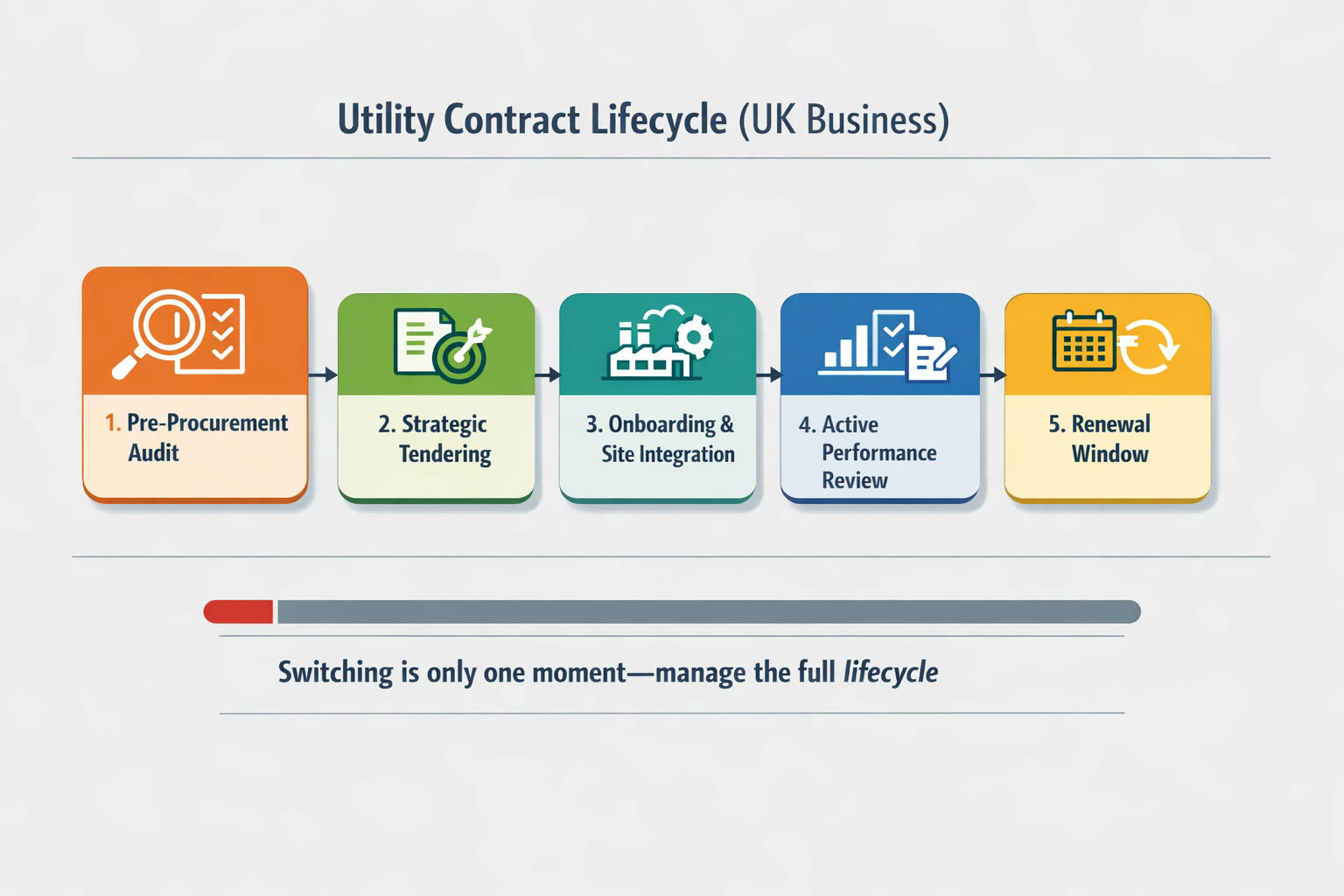
A utility contract is a managed asset: audit, tender, onboard, review performance, then renew on time - so you control risk and pricing, not the supplier.
What is utility contract lifecycle management?
Utility contract lifecycle management is the process of managing utility agreements from initial assessment and procurement through to onboarding, performance monitoring, renewal, and supplier review. Rather than treating utility contracts as one-off purchases, businesses use a structured lifecycle approach to improve cost control, reduce risk, and maintain long-term supplier performance.
For UK businesses, utility contract lifecycle management covers electricity, gas, water, telecommunications, and other essential services. It ensures contracts remain aligned with operational requirements, budget objectives, sustainability goals, and changing market conditions throughout their term.
By managing the entire contract lifecycle, organisations can avoid costly deemed rates, improve supplier accountability, strengthen compliance processes, and create a more strategic approach to utility procurement.
The 5 stages of effective utility contract lifecycle management
A proactive approach turns your energy, water, and telecoms contracts from a simple overhead into a tool for financial planning and operational stability. Here are the five stages to take back control.
Stage 1: The pre-procurement audit
Before you even think about new rates, you need a clear picture of your current position. This stage is about gathering intelligence.
Data Collection: Pull together at least 12 months of bills for all your sites and meters. You're looking for consumption patterns (kWh), peak usage times, and current contract end dates.
LOA Setup: Prepare a Letter of Authority (LOA). This document allows a trusted consultant to request data from suppliers on your behalf. It’s a crucial tool for getting accurate, behind-the-scenes pricing information that isn't publicly available.
Without this data, you're negotiating blind. A thorough audit reveals opportunities for consolidation, identifies erroneous charges, and establishes a baseline for performance.
Stage 2: Strategic tendering
With your data in hand, you can go to market from a position of strength. This isn’t about just finding the lowest unit rate.
Go Beyond the Headline Rate: Ask potential suppliers about "pass-through" charges or non-commodity costs. These can includenetwork charges (TNUoS/DUoS), policy costs, and balancing charges that aren't part of the unit rate but will appear on your bill.
Check the Terms: Scrutinise termination clauses, payment terms, and service level agreements. A cheap rate can be undone by inflexible terms that don't suit your business operations.
Align with Values: This is your chance to procure renewable energy and build a foundation for your sustainability goals. Securing agreen tariff for your business electricity is one of the most direct ways to reduce your Scope 2 emissions.
Stage 3: Onboarding and integration
Once you’ve signed a new contract, the work isn't over. A smooth transition is vital to avoid billing errors and service disruptions.
Confirm the Switch: Ensure your new supplier has successfully registered your meters and that your old supplier has closed your account.
Meter Management: If you're installing a smart meter or require half-hourly (HH) metering, coordinate the rollout with your new supplier to ensure accurate data collection from day one.
Set Up Your Account: Establish online access to your account and confirm the first bill reflects the new, agreed-upon rates. Any discrepancies should be flagged immediately.
Stage 4: Active performance review
This is the stage most businesses skip, yet it’s where long-term value is protected. Your contract is a living agreement, not a document to be filed away.
Regular Bill Validation: Don't just pay the bill. Check it against your contract terms and meter readings. Is the unit rate correct? Are the standing charges as agreed? Are there any unexpected fees? This simple monthly check can uncover costly errors.
Usage Optimisation: Use the data from your bills and smart meters to identify opportunities to reduce consumption. Shifting energy-intensive tasks to off-peak hours can have a significant impact.
ESG Tracking: As larger clients increasingly demand environmental data from their supply chains, your energy contract becomes a key source for reporting. A good supplier should provide clear data on your carbon footprint, helping you meet these new compliance demands.
Stage 5: Managing the renewal window
The final months of your contract are the most critical. This is where suppliers have historically held the advantage, but with a clear strategy, you can stay in control.
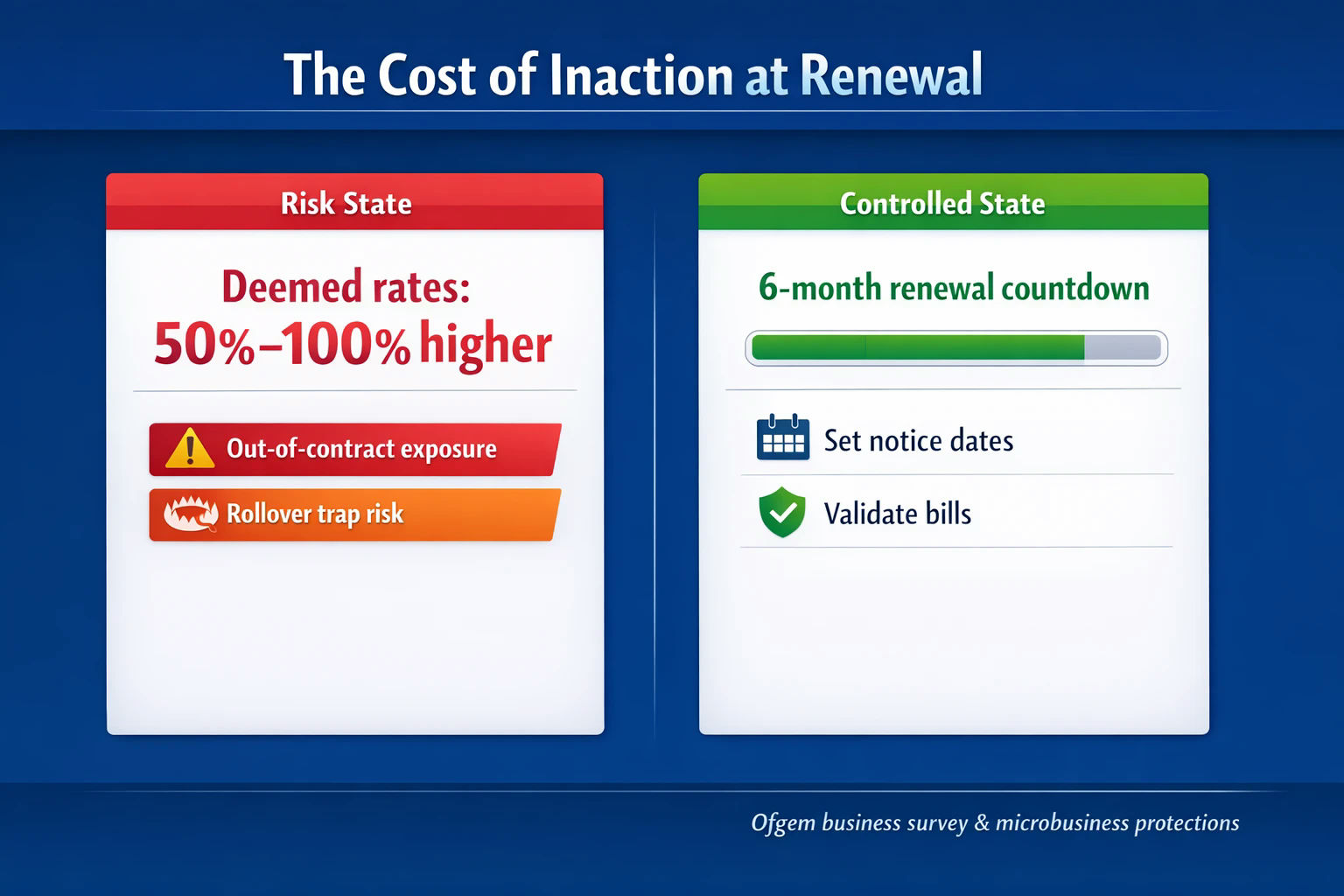
Yourrenewal window typically opens 3 to 6 months before your contract ends. This is the period when you can agree on a new contract without penalty. Missing it can be expensive. If you fail to give notice or agree on a new deal, you can be moved onto "deemed rates," which can be 50% to 100% higher than a negotiated contract.
Seeing the downside in numbers clarifies priorities: avoid out-of-contract rates by running a visible renewal countdown and locking in notice dates early.
For microbusinesses, Ofgem regulations provide a safeguard: rollover contracts are legally capped at 12 months. However, for larger businesses, automatic rollovers can lock you into another uncompetitive term. The key is to diarise your contract end date and your notice period and act well within the window.
The Letter of Authority: granting access without losing control
The Letter of Authority (LOA) is one of the most powerful tools in utility management, but it's often misunderstood. An LOA simply gives a third party, like a consultant, permission to speak to suppliers on your behalf. It doesn't give them the power to sign contracts for you unless you grant that level of authority.
You can and should define the scope of an LOA:
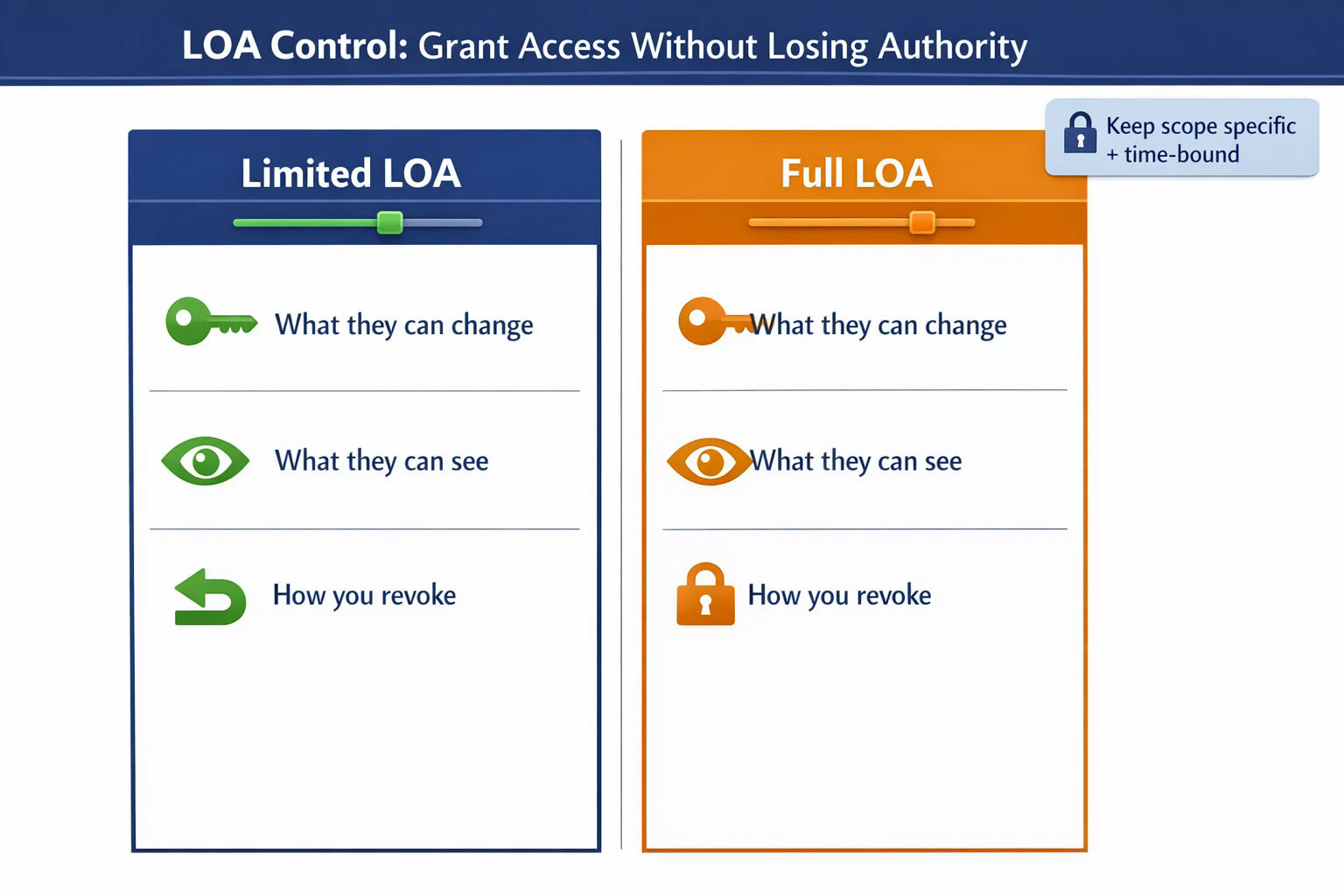
Limited Authority: Allows a consultant to request billing and consumption history. This is essential for conducting a market tender.
Full Authority: Allows a consultant to accept and sign contracts on your behalf. This should only be granted to a trusted partner with whom you have a clear, long-standing relationship.
A properly managed LOA is time-bound and specific, ensuring you retain full control over the final decision.
LOAs shouldn’t be a leap of faith. Use limited, time-bound authority with clear revocation steps so you can work with suppliers or brokers while staying in control.
How do you manage utility supplier relationships effectively?
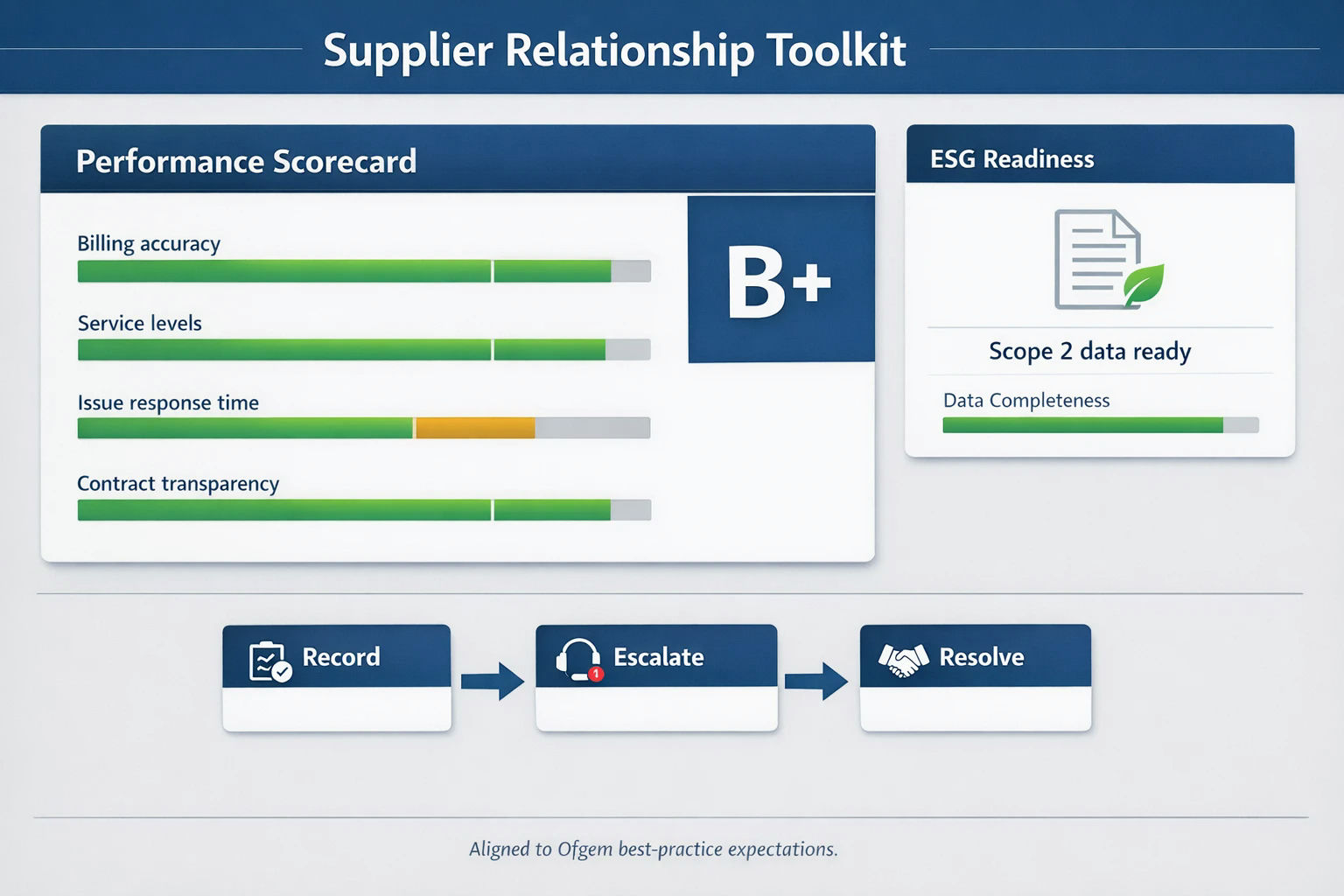
Strong supplier relationships help businesses resolve issues faster, improve service quality, and gain better visibility into future market changes. Effective supplier relationship management goes beyond contract negotiation and focuses on ongoing communication, performance monitoring, and accountability.
A structured supplier management process should include:
Regular performance reviews against agreed service levels
Routine bill validation and contract compliance checks
Clear escalation procedures for service issues and disputes
Collaboration on sustainability and carbon reporting requirements
Early engagement before renewal windows open
By treating utility suppliers as strategic partners rather than transactional providers, businesses can improve contract outcomes, reduce operational risk, and create opportunities for long-term cost savings.
A simple framework for resolving supplier disputes
Despite best efforts, issues can arise. While regulators like Ofgem provide a backstop, a structured internal approach can often resolve problems faster and without formal escalation.
When a billing error or service issue occurs, don't just call customer service. Follow a simple protocol:
Record Everything: Document the issue with dates, bill numbers, and relevant details. Communicate in writing (email) to create a paper trail.
Escalate Internally: If the initial contact doesn't resolve the issue, ask for the complaint to be escalated to a manager or a dedicated disputes team. Reference your written records.
Formal Complaint: If an internal escalation fails, lodge a formal complaint with the supplier. They have a regulatory obligation to respond within a set timeframe.
Ombudsman: Only after you have followed the supplier's formal process and received a "deadlock letter" or no resolution after eight weeks should you approach theEnergy Ombudsman.
This methodical approach ensures you build a strong case and often leads to a quicker resolution, whether you are managing yourbusiness gas, electricity, or business water contracts.
Manage suppliers like strategic partners: track performance with a scorecard, validate bills, prepare ESG data, and follow a simple record–escalate–resolve protocol.
From reactive bills to proactive strategy
Managing your utility contracts is no longer just an administrative task. It’s a strategic function that impacts your bottom line, your operational resilience, and your brand reputation.
By adopting a lifecycle approach, you move from a cycle of reactive switching to a state of proactive control. You can anticipate market changes, hold suppliers accountable, and turn a simple utility bill into a source of valuable business intelligence.
At Green Light Consultancy Group, we build long-term relationships to help businesses manage this entire lifecycle. If you're ready to treat your utility contracts as the assets they are, our team is here to provide clear, honest advice.
Take Control of Your Utility Contracts
Manage every stage of your utility contract lifecycle with a clearer strategy for procurement, supplier performance, renewals, deemed-rate avoidance, and long-term cost control.