
Compare business water suppliers and rates

Most businesses in England and Scotland can choose who supplies their water. Every business, charity and public sector organisation in England has been free to switch water retailer since 1 April 2017, and Scotland opened its market in 2008. Your water still comes through the same pipes from your regional water company. What changes is the retailer that bills you, reads your meter and looks after your account, so it pays to compare business water suppliers before you agree terms.

Green Light Consultancy Group (GLCG) compares business water quotes from our panel of water retailers, explains your options in plain English and handles the switch for you. Fill in the short form for a free quote.

Last updated: October 2026
Rated 5 star on Google reviews
Step 1 of 6

Secure & confidential · Free & no obligation · No pushy salespeople · Member of the Dispute Resolution Ombudsman

Business water at a glance

1.2 millionBusinesses, charities and public bodies in England that can choose their water retailer
1 April 2017Date every business in England became free to switch water retailer
About 10%Share of an average water and sewerage bill that covers retail costs
50 megalitresWater a site in Wales must use each year before it can switch

Sources: CCW (Consumer Council for Water), market opening briefing, 2017; Dŵr Cymru Welsh Water. Scotland opened its business water market in 2008 (Water Industry Commission for Scotland).

Who can switch business water supplier?

You can switch business water supplier if your premises are in England, whatever the size of your business, or in Scotland. In Wales, only sites using more than 50 megalitres (50 million litres) of water a year can switch, and only for water services. In Northern Ireland, businesses cannot choose a supplier, because NI Water supplies every customer.

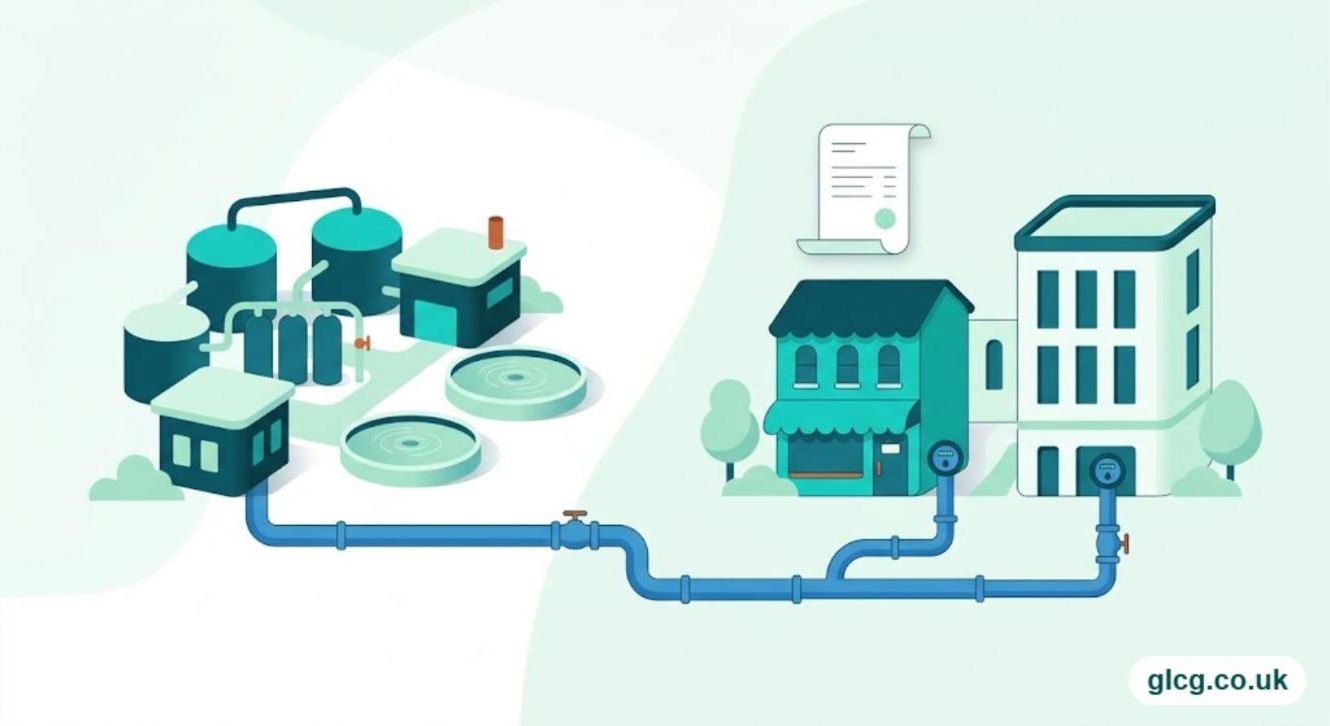
Illustration of a regional water treatment works supplying a shop and an office through underground pipes, with water meters and a water bill
Your regional wholesaler supplies the water. Your retailer bills you.
Who can choose a business water supplier in the UK
Nation Can businesses switch? When choice began Wholesaler Regulator
England Yes, all business premises 1 April 2017 The regional water company for your area Ofwat
Scotland Yes, all business premises 2008 Scottish Water Water Industry Commission for Scotland
Wales Only sites using more than 50 megalitres a year, for water only Large users only Dŵr Cymru Welsh Water or Hafren Dyfrdwy Ofwat
Northern Ireland No Not open NI Water Utility Regulator

Sources: CCW, Ofwat, Water Industry Commission for Scotland, Dŵr Cymru Welsh Water and GOV.UK.

Premises used mainly for business count as non-household and can usually switch. Mixed-use premises, such as a flat above a shop, depend on how the property is used and billed. If you are not sure, ask us and we will check for you.

How the business water market works

The business water market splits the work in two. Wholesalers are the regional water companies. They own the pipes, treatment works and sewers, supply your water and take away your wastewater, and you cannot change them. Retailers handle the customer side: billing, meter reading, customer service and water efficiency advice. When you switch, you change retailer, not wholesaler. In England, switches go through the market operator, MOSL. In Scotland, they go through the Central Market Agency.

Because the wholesaler sets most of the charges, the difference between retailers comes from their retail prices, billing, service and contract terms. That is why the right retailer still matters, even though the water is the same. The table below shows the main wholesalers.

Illustration of a regional water treatment works supplying a shop and an office through underground pipes, with water meters and a water bill
Your regional wholesaler supplies the water. Your retailer bills you.
Wholesaler or retailer: who does what
Job Who does it
Supplying clean water Wholesaler
Taking away and treating wastewater Wholesaler
Repairing water mains and public sewers Wholesaler
Setting wholesale charges Wholesaler, within limits set by the regulator
Billing and meter reading Retailer
Customer service and complaints Retailer
Retail prices, discounts and contract terms Retailer
Regional water wholesalers in Great Britain
Area Wholesaler
London and the Thames Valley Thames Water
Kent, Sussex, Hampshire and the Isle of Wight Southern Water
East of England Anglian Water
The Midlands Severn Trent
North West England United Utilities
North East England Northumbrian Water
Yorkshire Yorkshire Water
Somerset, Dorset and Wiltshire Wessex Water
Devon and Cornwall South West Water
Scotland Scottish Water
Most of Wales Dŵr Cymru Welsh Water

In some areas a separate water-only company supplies your water, such as Affinity Water, South East Water, SES Water or Portsmouth Water, while the regional company handles your wastewater. Your bill shows which companies serve your premises, or you can check by postcode on the Water UK website.

Small business water

Many small businesses are still with the retailer they were given when the market opened, on that retailer’s standard terms. If you have never switched, it is worth comparing. A saving on the retail part of the bill adds up over a few years, and accurate bills and better service save time too. Shops, offices, cafés, salons and pubs usually fall into this group.

Large and multi-site water users

Larger users and businesses with several sites have the most to gain, because one retailer can bring every site in England onto one account and one bill. Very large users in England can also apply to Ofwat for a self-supply licence and act as their own retailer. See our guide to multi-site utility portfolio management.

How are business water rates calculated?

Business water rates are worked out from how much water you use, the wastewater you send to the sewer, and fixed charges for your supply and drainage. Metered premises pay a price per cubic metre (m³), which is 1,000 litres, plus standing charges. Unmetered premises are usually charged on the rateable value of the property.

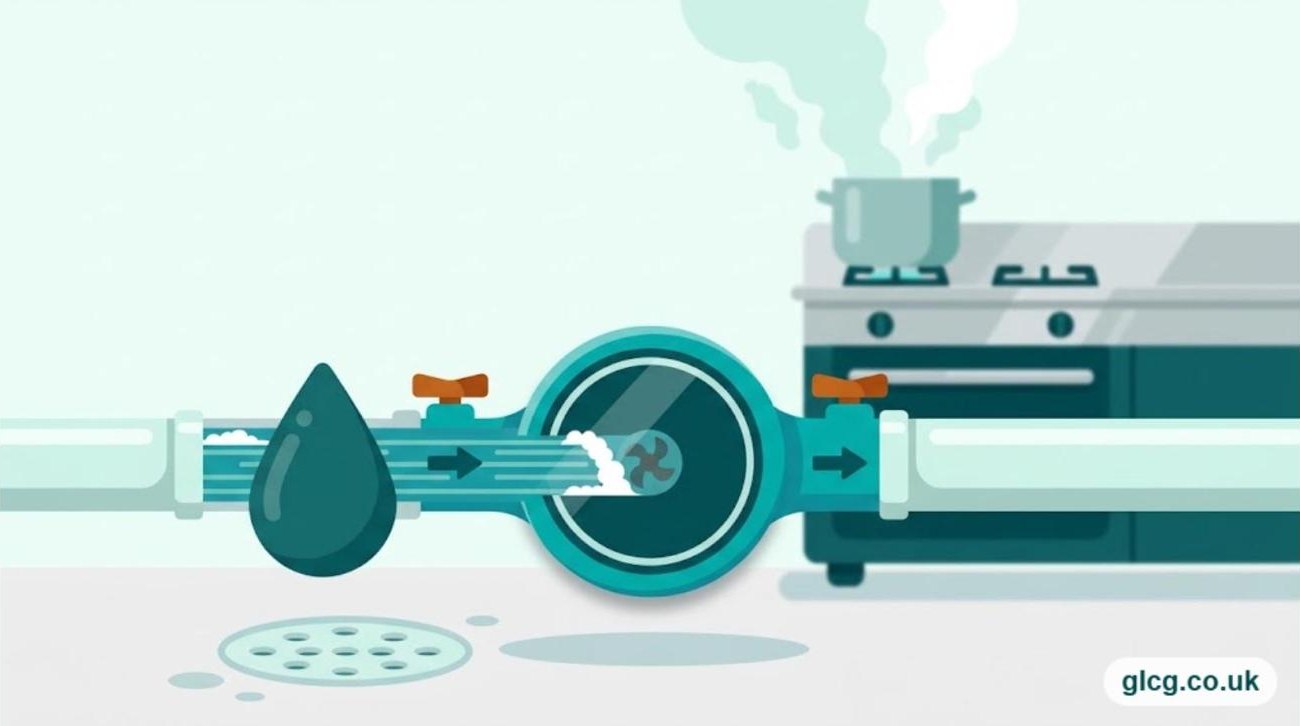
Wastewater is normally charged on a share of the water you use, because most of it goes back down the drain. Most wholesalers assume that around 95% returns to the sewer. If a lot of your water evaporates or goes into your products, for example in cooling, irrigation or food production, you can ask your wholesaler for a lower figure, known as a non-return to sewer allowance.

Worked example: a business using 1,000 m³ of water a year

  • Water charged on: 1,000 m³
  • Wastewater charged on: 950 m³ (95% of 1,000 m³)
  • Plus standing charges, surface water drainage and highway drainage

This is an illustration of how charges are worked out. Rates per m³ depend on your wholesaler.

Wholesale charges vary by region and are reset each year from 1 April, so your quote depends on where your premises are. We compare the full annual cost, so you see every charge before you decide.

  • Water usedMetered volume 1,000 m³
  • Wastewater chargedStandard 95% return 950 m³
  • Wastewater chargedWith a 70% return allowance 700 m³
Illustration for a business using 1,000 m³ of water a year. A non-return to sewer allowance lowers the wastewater volume you pay for.
Illustration of a commercial water meter measuring water used, with steam rising from a kitchen pot to show water that never reaches the drain
Water that evaporates or goes into your products can count towards a lower wastewater charge.

Where does your business water bill go?

Most of a business water bill goes to the wholesaler, not the retailer. When the English market opened, retail costs made up about 10% of an average water and sewerage bill, according to CCW. The rest pays for supplying water, taking away wastewater and running the pipes, sewers and treatment works.

This tells you where the savings are. Switching retailer can lower the retail part of your bill and give you better service and billing. The bigger savings often come from paying only what you owe: the right drainage charges, the right wastewater allowance and quick action on leaks. We look at both when we compare.

 Retail costs Wholesale costs

Average water and sewerage billAbout 10% retail

  
Share of an average bill when the English market opened in 2017. Source: CCW.

What makes up a business water bill?

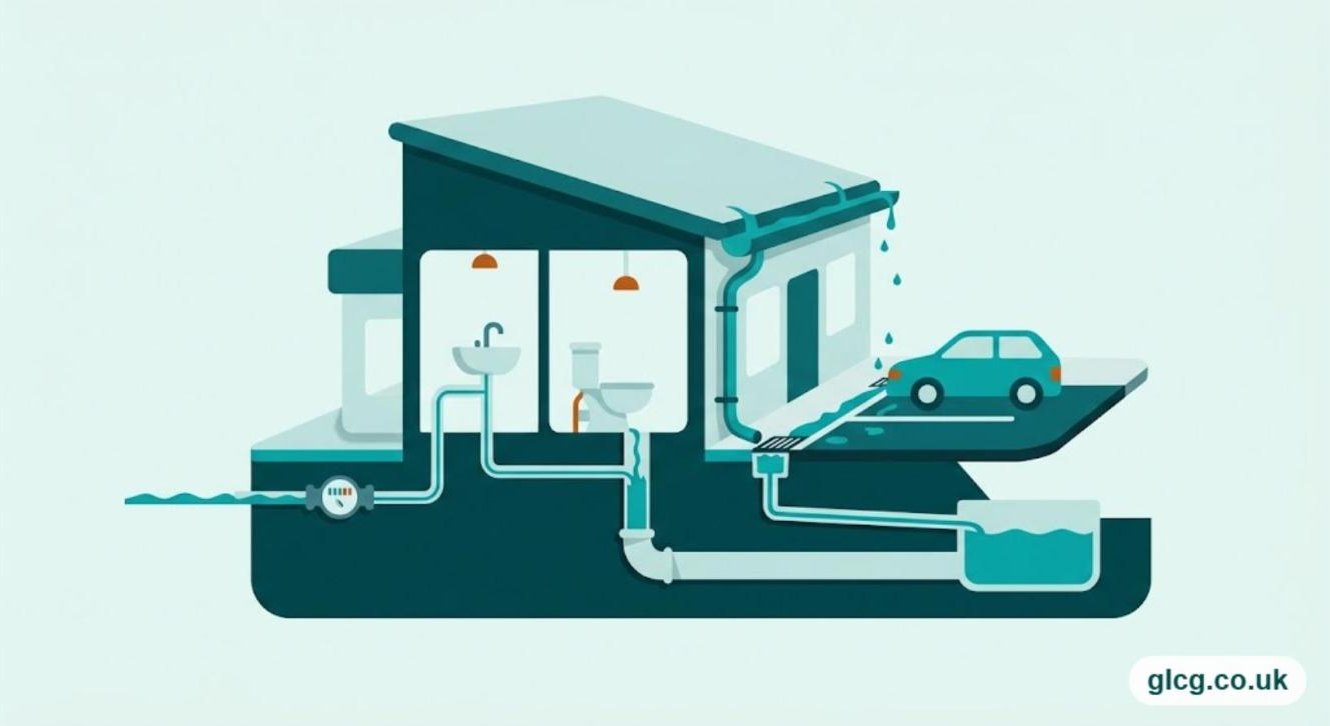
A business water bill can include up to six charges. Which ones you pay depends on your premises, your meter and what you send down the drain.

Your bill should list each charge, with the volumes and rates used. Check them against your meter readings and your premises. For example, you should not pay surface water drainage if none of your rainwater reaches the public sewer, or trade effluent charges if you do not discharge any.

Cutaway illustration of a business premises showing clean water entering through a water meter, wastewater going to the sewer and rainwater draining from the roof and car park
Water, wastewater and rainwater drainage are charged separately.
01

Water supply

The clean water you use, charged per m³ if you have a meter, plus a fixed standing charge for the supply. Unmetered premises usually pay on rateable value.

02

Wastewater

Taking away and treating used water from sinks, toilets and processes. Usually charged on around 95% of the water you use, plus a standing charge.

03

Surface water drainage

Rainwater that runs off your roof and car park into the public sewer, charged on site area or rateable value. If none of your rainwater reaches the public sewer, you can apply for a rebate.

04

Highway drainage

A share of the cost of draining public roads, which most wholesalers charge to business premises connected to the public sewer.

05

Trade effluent

Wastewater from business processes, such as manufacturing, food production or laundries. You need consent from your wholesaler, and the charge depends on the volume and strength of the effluent.

06

VAT

Water is zero-rated for most businesses. If your main business activity is industrial, such as manufacturing, construction, mining or energy and water supply, water is standard-rated at 20% (HMRC).

Not sure your charges are right? Send us recent bills and we will check them for you. For more on what each bill covers, read what counts as a utility bill.

Business water contract types

Business water contracts are simpler than energy contracts, because the wholesaler sets most of the price. The main options are:

01

Fixed-term contract

You agree a retailer, a price or discount and service terms for a set period. Check the length, notice period and any exit fee before you sign.

02

Standard terms

If you have never switched, you are probably on your retailer’s standard terms. A negotiated contract can cost less, so it is worth comparing.

03

Deemed terms

If you move into premises and use water before agreeing terms, a retailer supplies you on deemed terms. Arrange a contract as soon as you take on the property.

04

Multi-site contract

One retailer for all your sites, with one account and consolidated billing. This suits chains, franchises and property portfolios.

05

Self-supply licence

For very large users in England. Ofwat can license a business to act as its own retailer and buy wholesale services directly. It takes time and expertise to run.

Not sure which fits? Read our guide to utility contract management, or ask us and we will recommend the right option for your sites.

Moving premises or coming to the end of a contract

When you move into new premises, set up a water account straight away, because charges start from the day you take on the property. If you do nothing, the retailer for that site will supply you on its standard or deemed terms.

When a fixed-term water contract ends, you usually stay with the same retailer on its standard terms until you agree a new deal or switch. Standard terms are not always the best value, so treat the end date as the time to compare.

How to stay on the best terms

  • Find your contract end date. It is on your bill or in your contract.
  • Give notice if your contract requires it, so you can switch on time.
  • Moving premises? Give final meter readings at the old site and opening readings at the new one.
  • Check who supplies the new site. The last occupant’s retailer will usually still be listed.
  • Already on standard terms? Ask us for quotes. You can usually switch without waiting for a contract to end.

Who is the cheapest business water supplier?

There is no single cheapest business water supplier. Each retailer prices its quotes on your wholesaler area, your usage, the number of sites and your payment terms, so the cheapest retailer for one business can cost more for another. Retail offers also change over time, so compare quotes for your own premises.

To find the best business water deal for your premises:

  • Compare the total annual cost of each quote, not just a discount percentage.
  • Compare like for like: the same sites, contract length and payment method.
  • Check how you are billed. Monthly bills in arrears, actual meter readings and an online account all make a difference.
  • Look at each retailer’s service and complaints record as well as its price.

The largest business water retailers in England by number of supply points include Water Plus, Castle Water, Business Stream, Wave and Everflow (MOSL data, 2026). Ofwat lists the licensed retailers in England, and the Water Industry Commission for Scotland lists licensed providers in Scotland. We compare quotes from our panel and show you the best business water rates available for your premises on the day.

How to compare business water suppliers

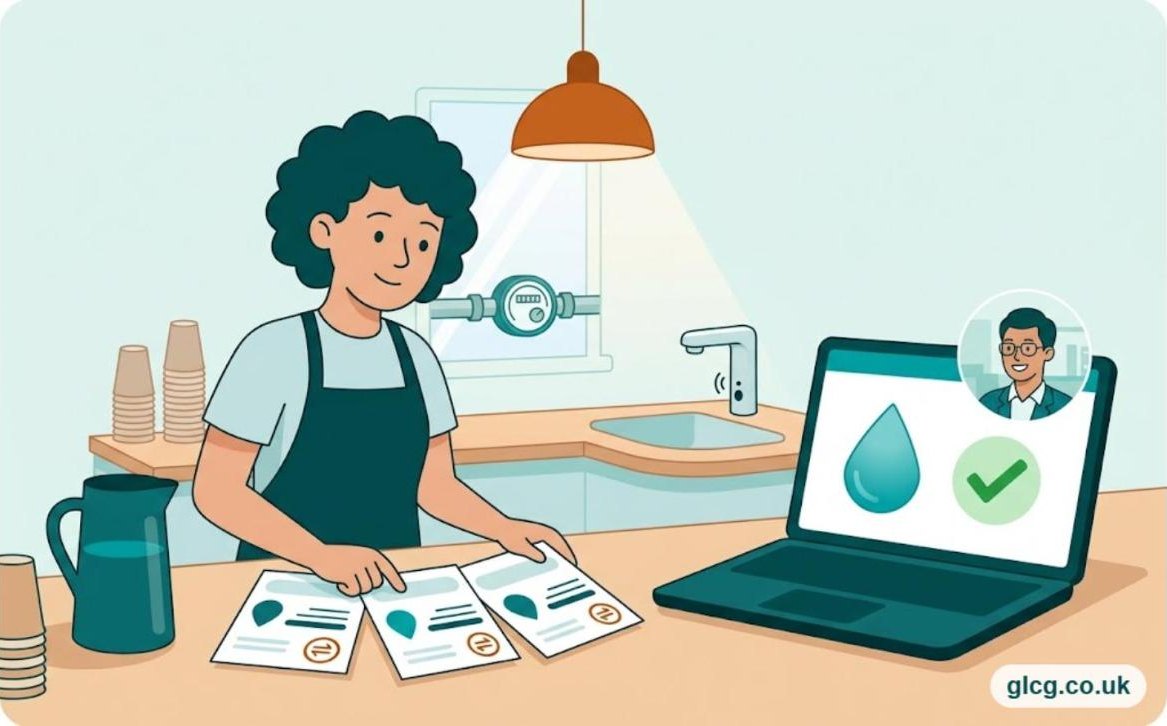
To compare business water suppliers, gather your bills and supply details, get quotes from several retailers for the same sites and contract length, then compare the total cost and the terms side by side. A broker such as GLCG does this for you in one go.

Send us a recent bill for each site and we will do the comparison for you, explain the differences in plain English and recommend the best option. There is no obligation to switch.

Illustration of a cafe owner comparing business water bills on a laptop with a GLCG advisor on a video call
We compare business water quotes and talk you through them.

What you need for a business water quote:

  • Your business name and the address of each site.
  • Your current retailer, which is shown on your bill.
  • Your supply point ID (SPID) for each site, also on your bill.
  • Your annual water use in m³, or a few recent bills.

When we compare business water quotes, we look at:

  • The retail price or discount, and the total annual cost.
  • How often you are billed, and whether you pay in advance or in arrears.
  • Contract length, notice periods and exit fees.
  • How meter readings are taken and how estimated bills are handled.
  • Online account access and billing for multiple sites.
  • Extra services such as leak detection, water audits and trade effluent support.

Who is my business water supplier?

Your retailer’s name is on your water bill. Your wholesaler is the regional water company for your area, shown in the table above, and you can check it by postcode on the Water UK website. Cannot find a bill? Send us your address and we will help you find your supplier and SPID.

We compare business water alongside electricity and gas, so you can manage all your utilities with one team. GLCG has helped more than 15,000 businesses with their energy. We are a member of the Dispute Resolution Ombudsman and an official energy partner of Norwich City FC and West Bromwich Albion.

How to switch business water supplier

Switching business water supplier takes three steps, and we manage it from start to finish. Your supply is not interrupted, because the water comes through the same pipes and meter from the same wholesaler. Only the retailer that bills you changes.

1
We search
Tell us about your business in the short form. We search our panel of water retailers for business water quotes that match your usage.
→
2
We compare
We weigh up retail prices, billing, contract terms and extra services, then talk you through the best quotes.
→
3
You save
You choose the contract you want. We handle the paperwork and the switch, with no disruption to your supply.
→

When to switch your business water supplier

You can compare business water at any time. If you are on standard terms, you can usually switch straight away. If you are in a fixed-term contract, check the end date and notice period first, then compare a few months ahead so your new contract starts when the old one ends. To plan costs across all your utilities, read our guide to utility budgeting.

  • 3 months or more before your end date. Find your end date, notice period and annual usage.
  • 2 to 3 months before. Get quotes and compare the terms.
  • 1 month before. Agree your new contract, and give notice to your current retailer if it is needed.
  • On your switch date. Your new retailer takes over, with no change to your supply.

Ways to cut your business water costs

The quickest way to cut your business water costs is to make sure you only pay for what you use, then get onto a competitive retail deal. Start here.

  • Check your surface water drainage. If rainwater from your site soaks away or drains to a watercourse rather than the public sewer, apply to your wholesaler for a rebate.
  • Claim a wastewater allowance. If water evaporates or goes into your products, ask for a non-return to sewer allowance so you are not charged wastewater on it.
  • Fix leaks fast. A hidden leak on your side of the meter can run for months. Read your meter when nothing is running to check. Wholesalers may give a leak allowance if you repair it quickly.
  • Stop estimated bills. Send regular meter readings, or ask about a smart or data-logging meter.
  • Unmetered? If you pay on rateable value, a meter may cost less. Ask us to compare.
  • Use less water. Sensor or push taps, dual-flush toilets, urinal controls and efficient dishwashers all cut use.
  • Compare your retailer. If you have never switched, you are probably on standard terms.
  • Manage utilities together. Read our guide to cross-utility cost optimisation.

Business water FAQs

Yes, if your premises are in England or Scotland. Every business, charity and public sector organisation in England has been able to switch water retailer since 1 April 2017, and Scotland opened its market in 2008. In Wales, only sites using more than 50 megalitres a year can switch, and in Northern Ireland businesses cannot switch.

Your retailer’s name is on your water bill. Your wholesaler, which supplies the water and runs the pipes and sewers, is the regional water company for your area. If you cannot find a bill, send us your address and we will help you check.

Compare quotes from several retailers, choose the one you want and agree the contract. Your new retailer then arranges the transfer through the market operator. We handle the comparison and the paperwork for you.

It depends on your current contract and your new retailer. If you are not tied into a fixed term, you can usually switch quickly. If you are, the switch is timed so that your new retailer takes over when your contract ends.

No, your water supply is not interrupted when you switch. The same wholesaler supplies the water through the same pipes and meter, and only the retailer that bills you changes.

Not necessarily. Business and household water are charged in different ways, and businesses can pay extra charges such as highway drainage and trade effluent. Unlike households, businesses in England and Scotland can switch retailer and negotiate their terms.

Metered premises pay a price per cubic metre for water, wastewater charged on a share of the water used, standing charges and drainage charges. Unmetered premises are usually charged on rateable value. The rates are set by your regional wholesaler and reset each year from 1 April.

There is no single good rate, because charges depend on your wholesaler area, your usage and your drainage. A good deal is one where you pay only the charges that apply to your site, with a competitive retail price and accurate billing. Compare quotes for your own premises to see where you stand.

Water is zero-rated for VAT for most businesses. If your main business activity is industrial, for example manufacturing, construction, mining or energy and water supply, water is standard-rated at 20%, according to HMRC.

A SPID, or supply point ID, is the unique reference for each water or wastewater supply at your premises in England. It is shown on your bill, and you need it to get a quote or switch retailer.

Yes. GLCG compares business water, business electricity and business gas, so you can review all your utilities with one team and line up your contract dates.

Yes. A retailer can supply all your sites in England on one account, and your sites in Scotland if it holds a licence there. A single account makes billing and reporting simpler for chains, franchises and property portfolios.

Compare business water suppliers

Comparing is the only way to know you are paying a fair price for your business water. Tell us a few details and we will compare business water quotes from our panel of retailers, check your charges and handle the switch. It is free, and there is no obligation to go ahead.